
Severe weather preparedness guide
How to Protect Your Car From Hail
Use permanent shelter when possible. Otherwise combine earlier warnings, a correctly fitted portable cover, and a deployment plan that never puts you outside during the storm.
Quick answer A garage or properly engineered carport provides the most reliable hail protection because it needs no deployment. If the vehicle must stay outside, use forecasts and alerts early, choose a cover that matches the vehicle's dimensions, practice securing it, and stop setup before lightning, strong wind, or hail begins.
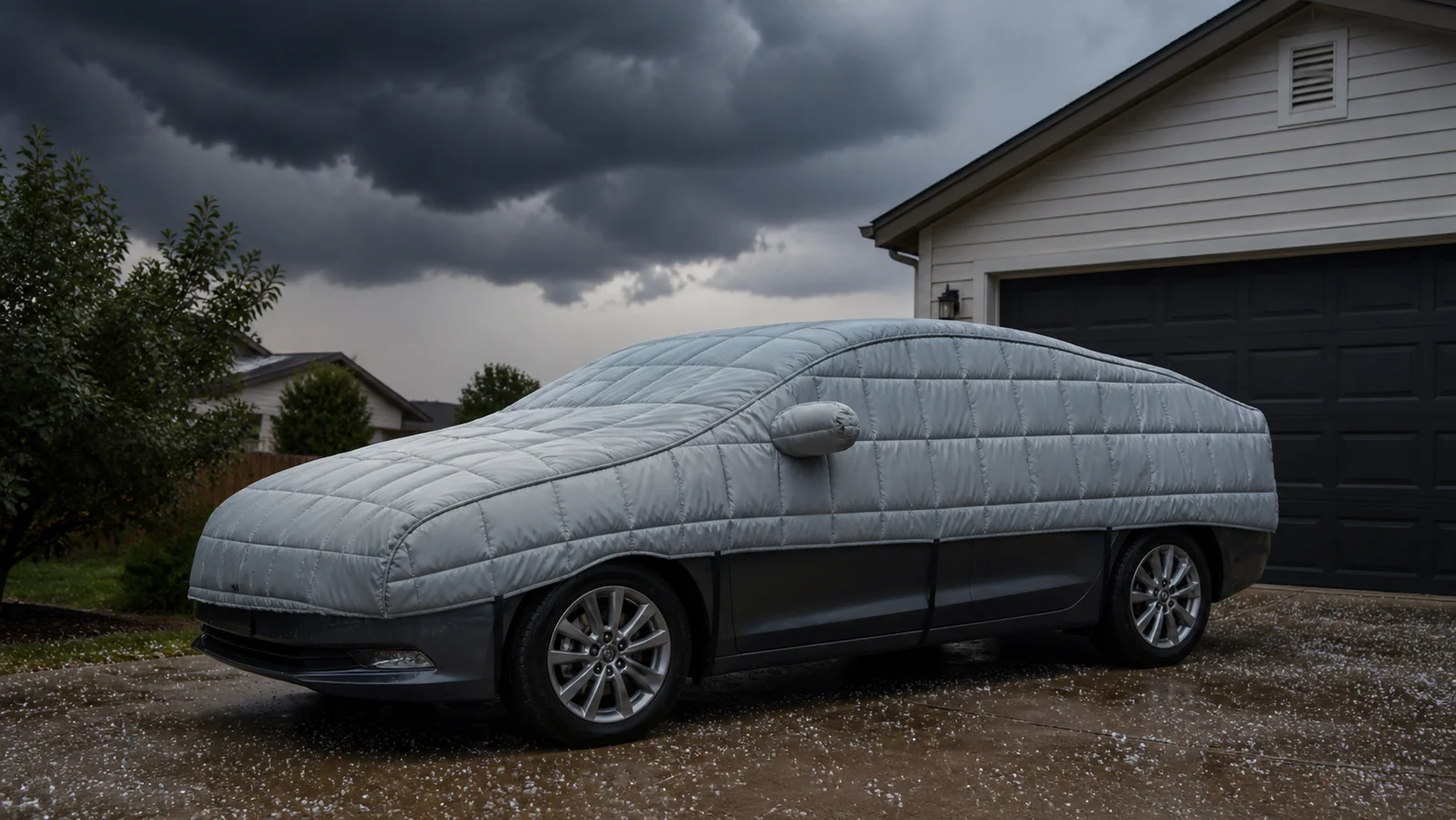
The best car hail protection, in order
| Protection | Why it works | What to verify |
|---|---|---|
| Garage | Rigid enclosure protects the roof, glass, and sides | Clearance and a safe path inside before storms |
| Rated carport | Permanent overhead barrier with no warning-time setup | Local permit, wind rating, anchoring, and side exposure |
| Inflatable cover | Creates impact spacing around the vehicle | Exact length, power, tiedowns, storage, and setup time |
| Padded cover | Cushions smaller impacts and protects glass/paint | Padding area, fit, straps, and stated impact limits |
Create enough warning time
Portable protection is only useful if it is on the car before the storm. Enable Wireless Emergency Alerts, monitor your local National Weather Service forecast, and use a SAME-capable NOAA Weather Radio as a second alert path at home. A Severe Thunderstorm Watch means conditions are favorable. A warning means severe weather is occurring or imminent in the warned area.If you hear thunder, you are close enough to be struck by lightning. Vehicle protection is no longer worth the exposure. Go indoors and stay away from windows.Choose protection by parking situation and warning time
The right choice is not simply the thickest cover. Start with where the vehicle normally sits, how much notice you realistically receive, and whether a safe adult can deploy equipment without delaying shelter. A garage that is kept clear enough to accept the vehicle is useful every day. A portable system may be appropriate for an apartment lot or driveway, but only when its storage, fit, and setup time match the owner's routine.If storms often arrive while the vehicle is at work, school, an airport lot, or a trailhead, a cover stored at home does not solve the main exposure. Identify nearby public parking structures or other lawful covered parking in advance and know their hours, clearance, and access rules. Move early—before a warning and before roads become congested. Never race a storm, park beneath a highway overpass, block an emergency lane, or enter a restricted structure for the sake of the car.| Situation | Most practical plan | Tradeoff to accept |
|---|---|---|
| Garage at home | Keep a usable bay and move the car before storms | Requires routine space management |
| Driveway with reliable notice | Practiced inflatable or full padded cover | Needs safe setup time, exact fit, and storage |
| Frequent away-from-home parking | Preplanned covered-parking options and alerts | May involve cost, walking, or moving earlier than expected |
| Very short notice | Rapid roof-and-glass shield only if it can be installed safely | Leaves side panels exposed |

Portable hail covers: what matters
- Coverage: roof-only products deploy faster but leave doors and quarter panels exposed.
- Impact method: air gap, foam, felt, and layered fabrics do not offer the same protection.
- Fit: a loose cover can flap, shift, or expose glass. A cover that is too tight may not create the intended cushioning.
- Wind control: inspect straps and anchors, but never remain outside to adjust them during a storm.
- Storage: the system must actually fit in the vehicle or garage and be dry before long-term storage.
Why blankets and cardboard are limited
Moving blankets, sleeping bags, and thick folded blankets may reduce some small-hail impacts when secured before the storm, but they are not engineered or independently rated hail protection. Wind can move them, water adds weight, and thin sections leave high points exposed. Cardboard becomes weak when wet and can abrade paint if debris works underneath it.Never place objects on the vehicle that can become windborne debris. Do not use bricks, concrete blocks, tools, or loose boards to hold padding down.
What to do after the storm
- Wait for the threat to pass. Check warnings and lightning before going outside.
- Photograph the vehicle before moving items. Capture every side, the roof, glass, and the surrounding hail.
- Prevent water intrusion safely. If glass is broken, follow insurer guidance and use temporary covering only when conditions are safe.
- Contact the insurer before repair. Comprehensive coverage commonly addresses hail, but deductibles and terms vary.
- Avoid unsolicited repair pressure. Verify the shop, estimate, paintless-dent method, warranty, and insurance process.