
AcuRite Atlas Review: Still Worth Buying in 2026?
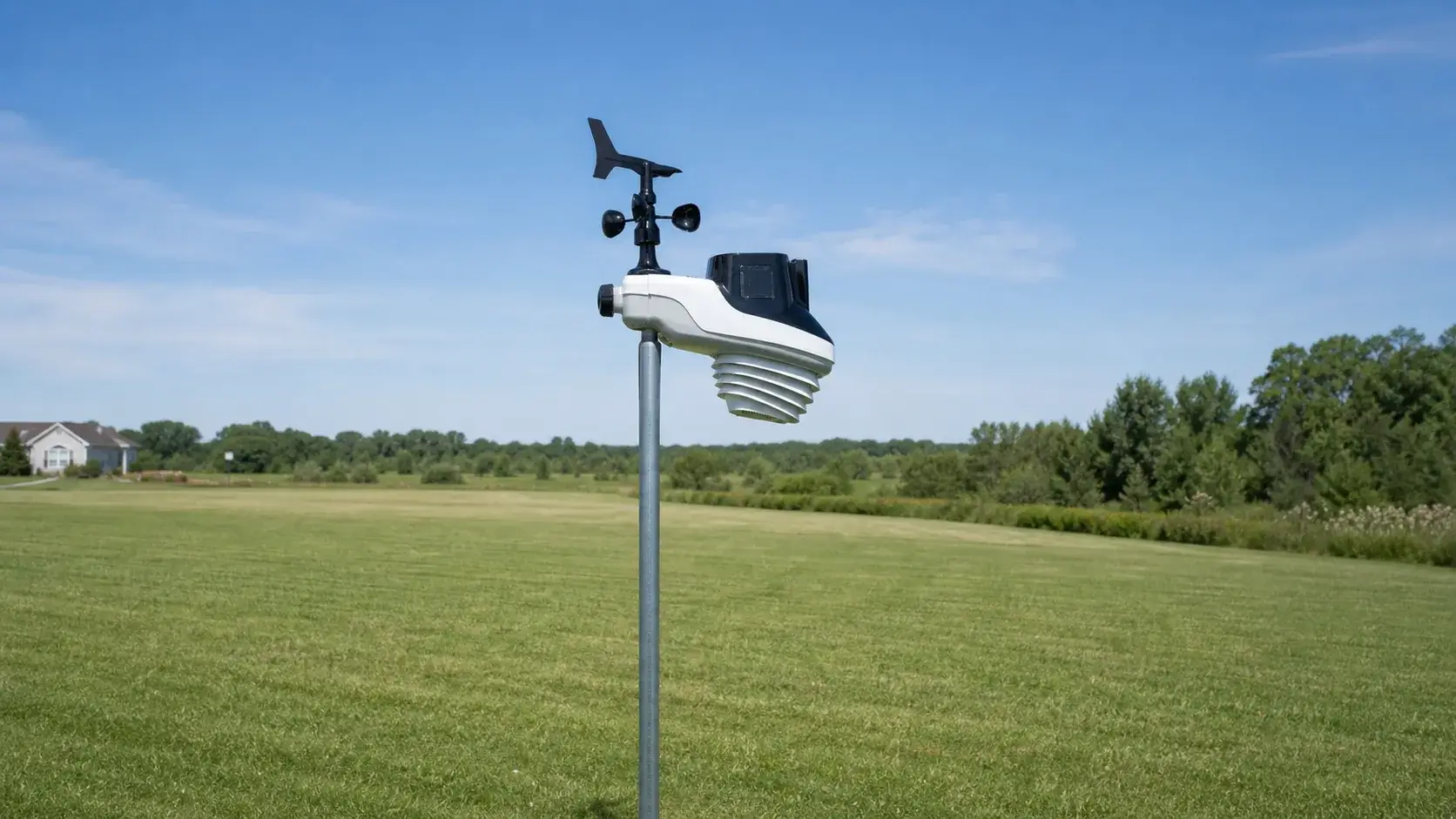
Atlas remains a capable middle-ground station with an aspirated temperature shield, fast wind reporting, UV and light data, replaceable components, and optional lightning—but its 2026 app transition needs a candid explanation.
Affiliate disclosure: WXObservation may earn a commission from qualifying Amazon purchases, at no additional cost to you. Availability, seller, bundle contents, and prices can change, confirm the current listing before ordering.

AcuRite Atlas 01001M bundle
Choose the direct-to-Wi-Fi bundle when remote dashboards and Weather Underground publishing matter. Buyers who only need a local display can compare the current white or gray HD-display bundles.
Confirm the listing includes the 06059M outdoor sensor, 06099M direct-to-Wi-Fi display, and 06075M lightning detector. Similar Atlas display-only listings are not complete stations.
Current Atlas bundles: identify the display first
The old WXObservation article was tied to model 01007M and described Atlas as “new.” That framing is no longer useful. Atlas is now a product family. AcuRite’s current lineup includes a direct-to-Wi-Fi bundle and local-only HD-display bundles in more than one color. The outdoor sensor can be the same while the indoor display determines internet access, forecasts, remote dashboards, and setup steps.
Direct-to-Wi-Fi display
Best fit when phone access and online publishing matter. Current product material pairs the connected display with the outdoor sensor and lightning detector.
White HD display
A local-display option with lightning detection. Confirm that it does not include the connected display features you expect from the 01001M package.
Gray HD display
Another local-display configuration. Similar names and photos make checking the exact display and included sensor modules essential.
Atlas specifications at a glance
| Manufacturer specification | Current Atlas sensor |
|---|---|
| Temperature | Range −40 to 158°F, stated accuracy ±1°F. |
| Humidity | Range 1–99% RH, stated accuracy ±2% from 0–90% and ±3% above 90%. |
| Rain | 0.01-inch increments, stated accuracy ±5%. |
| Wind | 0–160 mph stated range, wind direction stated accuracy ±3°. |
| UV and light | UV index 0–15 with stated ±1 accuracy, light intensity up to the manufacturer’s listed range. |
| Reporting cadence | Wind speed every 10 seconds, temperature, humidity, wind direction, rain, UV, and light every 30 seconds. |
| Wireless | 433 MHz link rated up to 330 ft/100 m depending on construction and interference. |
| Power | Four AA alkaline or lithium batteries, small solar panels power the internal aspirating fan. |
| Lightning module | Optional/commonly bundled detector with a stated 1–25 mile detection range. |
| Warranty | Current Atlas product material lists a limited one-year warranty. |
These are manufacturer specifications, not WXObservation laboratory results. The practical observation still depends on siting, leveling, airflow, maintenance, batteries, and the comparison method.
Accuracy and the aspirating fan
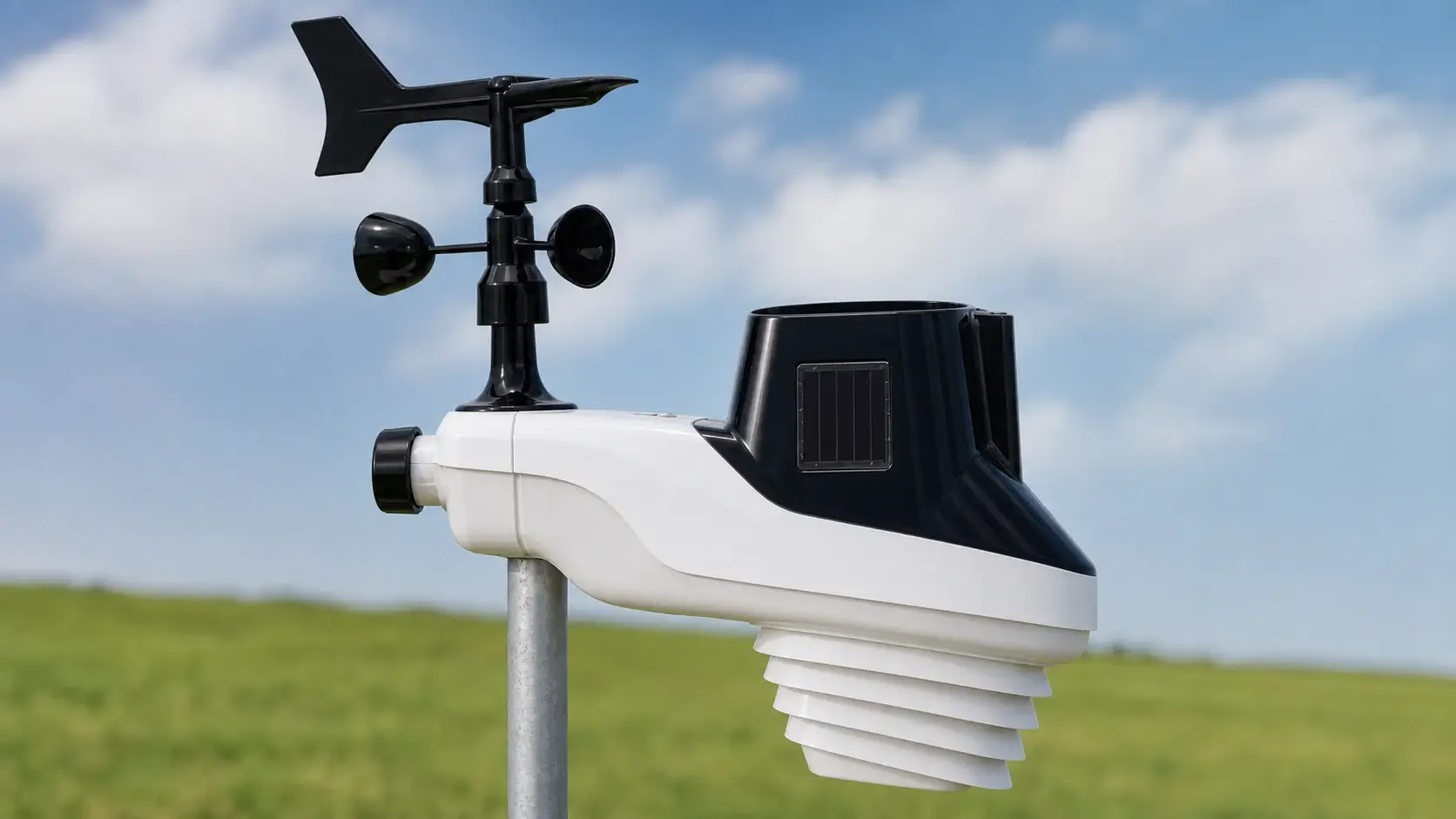
Atlas’s most meaningful sensor-design feature is the internal aspirating fan. The three small solar panels around the body power airflow through the temperature-humidity area during suitable light. Moving air reduces the chance that the shield itself heats in sun and biases the temperature upward. The panels do not replace the four AA batteries that power the sensor system.
Active daytime airflow is helpful, but it does not cancel a poor site. Roofs, siding, pavement, condenser exhaust, fences, and weak natural airflow can still make the location unrepresentative. The integrated wind instruments also benefit from height and clearance that may be worse for temperature. AcuRite’s wind extension accessory can raise the cups and vane relative to the main body, improving local separation without turning the product into a fully modular field station.
- Mount over representative ground: avoid a hot roof or paved courtyard when temperature is the priority.
- Keep the collector level: inspect after wind, ice, maintenance, or any mast adjustment.
- Use the wind extension deliberately: it can reduce local wake from the sensor body but does not remove nearby roof or tree turbulence.
- Keep the aspirating path clear: insects, dust, algae, and plant growth can defeat a good shield.
- Validate by variable: compare rain by storm, temperature in stable conditions, and wind only against similarly exposed instruments.
Lightning detection: useful context, not an official warning system
The plug-in lightning detector estimates strike distance and counts activity within the manufacturer’s stated 1–25 mile range. It can provide helpful local context, especially when storms are developing beyond sight. It should not replace National Weather Service warnings, radar, or immediate shelter decisions.
AcuRite’s own support page documents false or excessive detections caused by electrical interference. Potential sources include motors, garage-door equipment, pumps, fluorescent fixtures, computers, microwave ovens, and mobile electronics. If lightning counts look implausible, verify actual storm conditions, inspect the module connection, and test whether relocating the station or interference source changes the behavior.
Display options and remote monitoring
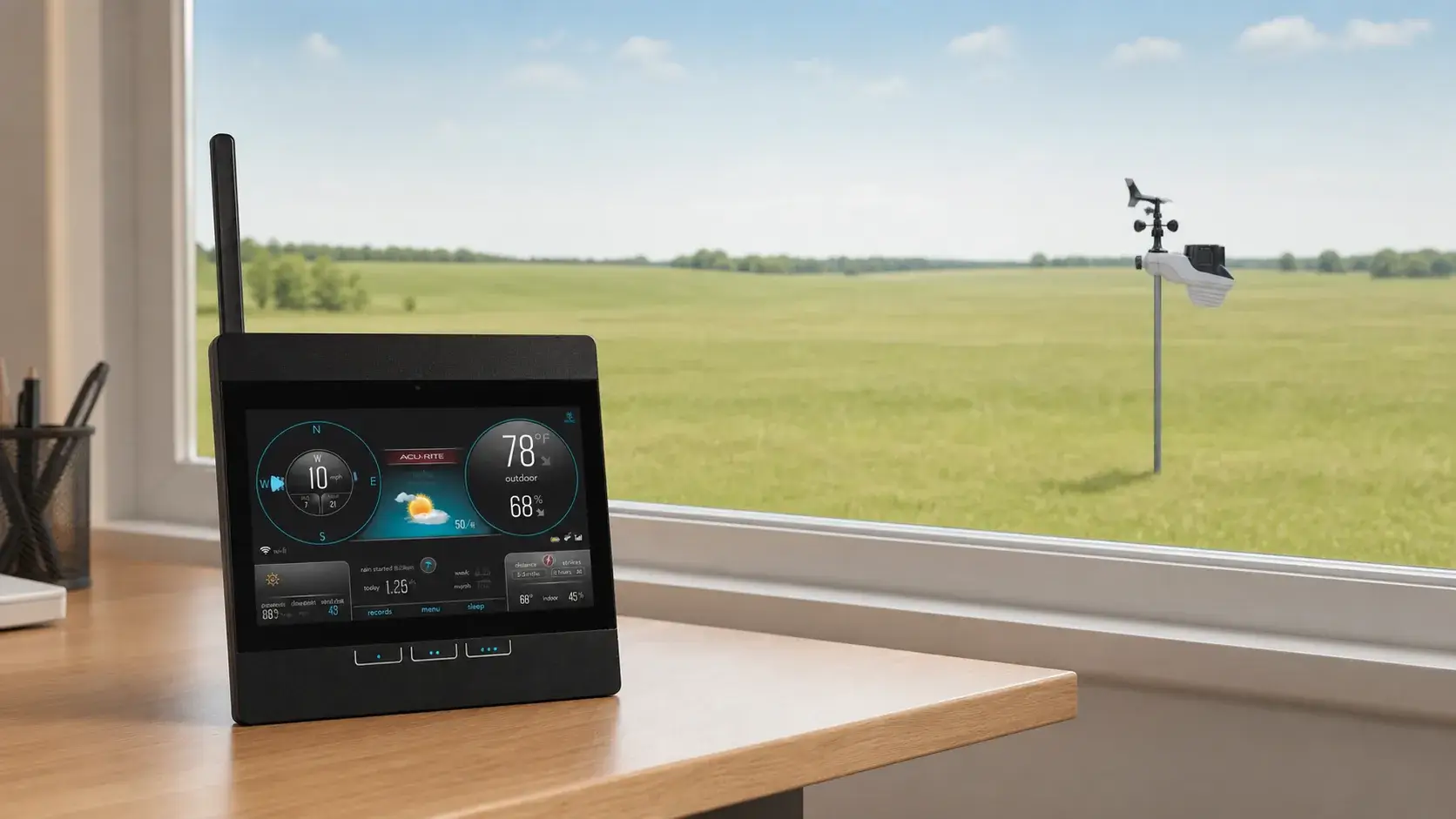
The direct-to-Wi-Fi display is the practical choice for owners who want readings on a phone, tablet, or browser and want to publish to Weather Underground. It connects to a 2.4 GHz network and streams the outdoor sensor data through the internet. The display also measures indoor temperature and humidity and barometric pressure, so its indoor location matters.
The non-Wi-Fi HD displays remain useful when a bright dedicated local screen is the goal and remote access is not. Because online capability belongs to the display/gateway path rather than the outdoor sensor alone, buying a replacement or used Atlas sensor does not automatically create internet access.
The 2026 My AcuRite and AcuRite NOW transition
AcuRite’s own web pages were not fully synchronized when this review was checked. Some current Atlas product text says the connected bundle is compatible with AcuRite NOW, while other AcuRite pages still direct Atlas owners to My AcuRite or describe migration as ongoing. AcuRite’s migration page says existing sensors and data are being moved and that My AcuRite remains available while migration issues are corrected.
This transition is also why a current review should avoid timeless promises about exact app screens, web-portal availability, smart-home support, or subscription features. The hardware can remain useful while the software path changes, but remote-monitoring convenience is part of the purchase decision and deserves current documentation.
Power, maintenance, and replacement parts
The Atlas sensor uses four AA batteries. AcuRite recommends lithium batteries where temperatures can fall below −4°F/−20°C. Optional power accessories include a solar power pack, power adapter, and remote battery pack, but compatibility and weatherproof installation requirements must be checked for the exact part. The display normally uses its included adapter and may accept backup batteries.
AcuRite’s compatibility chart lists replaceable wind cups, vane, wind assembly, temperature-humidity sensor, mounting bracket, displays, lightning detector, and power accessories. That is a meaningful ownership advantage over an opaque disposable array. Availability can change, so a current parts check matters more than an old list.
Routine work includes clearing the rain collector, shield, wind assembly, solar surfaces, and sensor openings, checking mast plumb and collector level, inspecting batteries and seals, and documenting firmware, app, display, and calibration changes. AcuRite’s reset procedure also emphasizes fresh batteries, interference distance, correct channel designation, and controlled side-by-side testing before reinstalling outside.
Atlas versus AcuRite Optimus
Optimus is AcuRite’s newer app-first flagship, with different industrial design, integrated lightning, newer smart-home positioning, and a lifetime warranty in current marketing. Atlas remains relevant when its aspirated shield, UV/light sensing, established replacement-part ecosystem, and lower package cost align better with the buyer. A newer model does not make an existing Atlas inaccurate, but it can affect software investment, warranty value, and future accessory attention.
Who should buy Atlas?
- You value active daytime aspiration and published sensor tolerances.
- UV, light intensity, and optional lightning detection matter.
- Replaceable consumer-level components are important.
- You can choose the correct display bundle and tolerate a changing app path.
- You want a middle ground between a basic 5-in-1 and a Davis system.
- Choose Optimus when the newest AcuRite app/smart-home platform and lifetime warranty lead.
- Choose WS-2000 when optional sensor breadth and the Ambient Weather ecosystem matter more.
- Choose Vantage Vue when long radio range, fast wind updates, and rugged simplicity justify the premium.
- Choose Vantage Pro2 when a separable anemometer and field-system flexibility are required.
Pros and limitations
- Active daytime aspiration reduces one common source of solar temperature bias.
- Fast 10-second wind reporting with published variable-specific cadences.
- UV, light intensity, and optional lightning in a consumer package.
- Useful replaceable parts and power accessories.
- Choice of connected or local-display bundles.
- Four AA batteries remain required, small solar panels power the fan.
- Lightning detection can be affected by electrical interference.
- One-year warranty is modest beside the newer Optimus positioning.
- App guidance was inconsistent during the 2026 migration.
- Integrated array still imposes a wind-versus-temperature/rain siting compromise.
Frequently asked questions
Is AcuRite Atlas discontinued?
The answer is no. AcuRite still lists current Atlas bundles, sensors, displays, accessories, and support alongside Optimus. The older 01007M framing is outdated, but the Atlas family remains current.
Do the Atlas solar panels charge the batteries?
The answer is no. AcuRite describes the three small panels as powering the internal aspirating fan. The outdoor sensor itself uses four AA batteries or a compatible optional power accessory.
Which Atlas bundle has Wi-Fi?
The current 01001M bundle uses the direct-to-Wi-Fi display. White and gray HD-display bundles are local-display options. Verify the exact SKU and included display before ordering.
Can the lightning detector give false strikes?
The answer is yes. AcuRite documents possible interference from motors, pumps, fluorescent fixtures, computers, microwave ovens, and other electronics. Use official warnings and radar for safety decisions.
Does Atlas use AcuRite NOW or My AcuRite?
AcuRite’s July 2026 pages were inconsistent during the migration. Follow the current migration prompt for the specific account and display, and check AcuRite’s live guidance before resetting or replacing hardware.
Is Atlas more accurate than Iris?
Atlas has a different sensor design, active daytime aspiration, UV/light sensing, faster wind reporting, and tighter published tolerances in current product material. Real-world results still depend heavily on siting and maintenance.
Bottom line
AcuRite Atlas remains a credible middle-ground station in 2026. Its aspirated temperature design, fast wind reporting, UV/light measurements, replaceable parts, and optional lightning detector are real strengths. The honest caveats are equally important: batteries still power the array, lightning can be affected by interference, the integrated housing imposes a siting compromise, and AcuRite’s app transition was still moving. Buy the correct display bundle and treat software guidance as dated information that must be rechecked.
Related Station Guides
Use these practical guides to get more reliable readings and a better ownership experience:
- All-in-one station tradeoffs — Learn where integrated arrays simplify setup and where shared placement creates compromises.
- Installation and siting — Place the sensors where buildings, pavement, trees, and roofs will not bias the readings.
- Maintenance checklist — Keep the rain collector, radiation shield, wind sensors, batteries, and mounts in working order.
Sources and review basis
This is an evidence-checked review based on current manufacturer product pages, manuals, support documentation, and clearly labeled owner/reviewer observations. WXObservation did not assign a laboratory score or claim long-term hands-on ownership of this unit.