
Home › Davis Instruments › Vue vs. Pro2
Evidence-Checked Head-to-Head Comparison
Davis Vantage Vue vs. Vantage Pro2: Which Should You Buy in 2026?
The Davis Vantage Vue vs Vantage Pro2 decision is mostly about installation and future flexibility, not whether one can measure basic backyard weather. Vue is the simpler all-in-one system. Pro2 costs more because it lets you separate wind from temperature and rain, then add advanced sensors when the site or project justifies them.
The short answer
Buy Vantage Vue when you want Davis durability, fast updates, and WeatherLink in the simpler and usually lower-cost installation. Buy Vantage Pro2 when separate anemometer placement, fan aspiration, UV, solar radiation, or a larger sensor network will materially improve what you can observe.
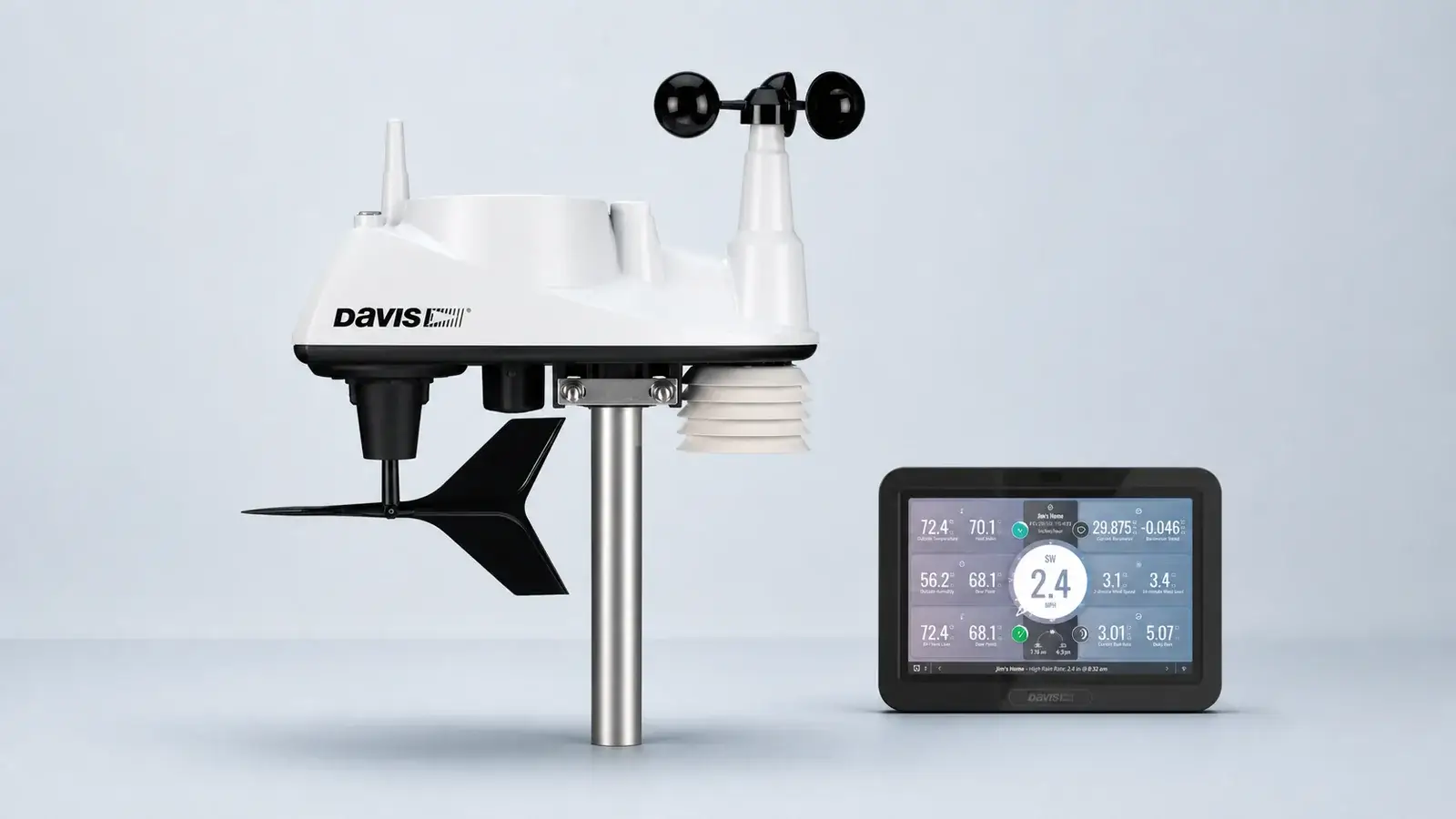
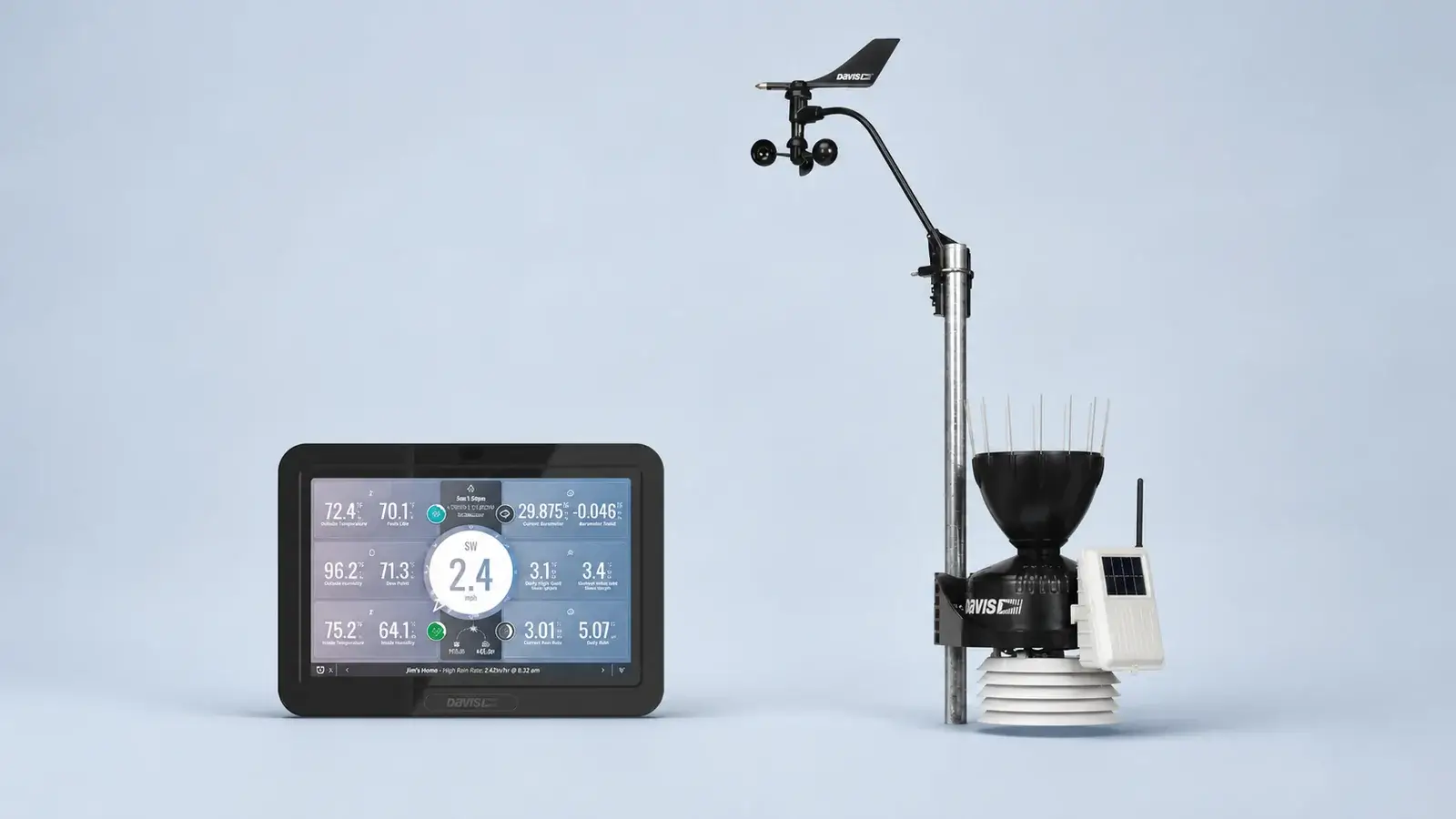
Affiliate disclosure: If you buy through an Amazon link below, WX Observation may earn a commission at no extra cost to you.

Vantage Vue
One solar-powered outdoor assembly measures temperature, humidity, rainfall, wind speed, and wind direction. The current 6242 family pairs the sensor suite with the 6313 WeatherLink Console.
Best for: homeowners, hobbyists, and remote properties where a compact installation matters more than separating the sensors.

Vantage Pro2
The rain and temperature suite can be installed separately from the anemometer. The Pro2 family also supports fan-aspirated shielding, UV and solar-radiation options, and additional transmitters.
Best for: serious observers and sites where wind, temperature, and rain need different exposure or future sensors are part of the plan.
Listing check: the linked Amazon bundles were labeled Metric versions when reviewed. Confirm the US or Metric measurement version, the regional radio model, seller, condition, and included console before ordering. Marketplace availability can change.
Vantage Vue vs. Vantage Pro2 comparison
| Decision factor | Vantage Vue | Vantage Pro2 |
|---|---|---|
| Outdoor layout | One integrated sensor suite | Rain and temperature suite with a separate anemometer |
| Core measurements | Temperature, humidity, rain, wind speed and direction | Temperature, humidity, rain, wind speed and direction |
| Fastest update | As fast as 2.5 seconds for key readings | As fast as 2.5 seconds for key readings |
| Wireless range | Up to 1,000 ft / 300 m line of sight | Up to 1,000 ft / 300 m line of sight |
| Sensor placement | One height and location must serve wind, temperature, humidity, and rain | Anemometer can be placed separately from temperature, humidity, and rain |
| Radiation shielding | Passive shield | Passive or fan-aspirated options, depending on model |
| Expansion | Best suited to the core weather measurements | UV, solar radiation, soil and leaf options, plus additional transmitters |
| Current console | 6313 WeatherLink Console in current 6242 bundles | 6313 WeatherLink Console in current 6252 bundles |
| Installation | Simpler mounting plan with one outdoor assembly | More planning and potentially more mounting hardware |
| Total installed cost | Usually lower | Usually higher, mounts, transmitters, and optional sensors can add cost |
| Best fit | Most homes and straightforward hobby installations | Demanding sites, advanced observations, farms, schools, and research-oriented projects |
Which station is more accurate?
Pro2 has the stronger real-world accuracy opportunity, but placement is the reason. Davis publishes technical specifications for both systems and explains that temperature sensors are commonly placed lower than wind instruments. Vue keeps those sensors together, so owners must choose a compromise height and exposure. Pro2 lets the anemometer go on a roof, tower, or taller mast while temperature, humidity, and rain remain lower and serviceable.
That does not make every Pro2 installation automatically better. A well-sited Vue can outperform a poorly placed Pro2. Pro2 becomes the better measurement tool when the property allows its split layout to be used correctly or when fan aspiration reduces solar-heating error at a difficult site.
What Pro2 adds beyond the basic weather data
Both stations cover the core measurements most home observers want. The Pro2 premium buys a system architecture with more choices:
- Separate wind placement instead of one all-in-one mounting location.
- Passive, daytime fan-aspirated, and 24-hour fan-aspirated configurations, depending on bundle.
- UV and solar-radiation options for applications that need those measurements.
- Additional Davis transmitters and specialty sensors for larger observation networks.
- Wireless and cabled Pro2 families, the Vue is positioned as the simpler wireless system.
If those capabilities will remain unused, Vue retains the same Davis ecosystem and the current WeatherLink Console without turning the installation into a larger project.
Compare total installed cost, not just the station box
The purchase price is only the first difference. Vue generally needs one suitable mast or mounting point. A Pro2 installation may need separate mounting locations, additional mast hardware, longer cable routing for the anemometer, or optional transmitters and sensors. Roof work, lightning protection, guying, and professional installation can also matter at taller sites.
Make the budget after you decide where temperature, rain, and wind will actually go. The lower-cost station is not a bargain if its all-in-one placement cannot answer the measurement you care about. The higher-cost station is not better value if its modular hardware will be mounted together and never expanded.
WeatherLink is no longer the deciding difference
Current Vue and Pro2 bundles can both include the 6313 WeatherLink Console, with a color touchscreen, local graphs, alarms, built-in Wi-Fi, and WeatherLink Cloud access. You do not need a separate WeatherLink Live merely to give a current 6313 console Wi-Fi.
The 6313 can also receive directly from compatible older wireless Vue and Pro2 sensor suites. Davis documents another path in which an older console retransmits on an unused transmitter ID. The console is a radio receiver, not a plug-in replacement for a cabled Pro2 console, and regional radio compatibility still matters.
Which Davis station fits your use?
Most homes and hobby stations
You want Davis durability and fast local readings, but a straightforward single-mast installation matters most.
Difficult exposure or serious wind data
You have a practical reason to place the anemometer higher or farther from the temperature and rain sensors.
Second property or simpler maintenance
You prefer one outdoor assembly with easier service access and do not expect to add advanced sensors.
Farms, schools, and advanced projects
UV, solar radiation, fan aspiration, specialty sensors, or multiple transmitters will be used rather than merely admired.
A five-minute buying checklist
- Name the measurement that matters most. Wind exposure may push the installation higher, temperature and rain often benefit from a lower, open, serviceable location.
- Choose the actual mounting points. Do this before comparing prices, not after the box arrives.
- Decide whether you need advanced sensors. Fan aspiration, UV, solar radiation, soil, and leaf measurements are Pro2 reasons only when they serve a real use.
- Include mounts and access in the budget. A safe, rigid installation and future cleaning access are part of the system.
- Confirm the bundle identity. Match US or Metric version, radio region, console, seller, and condition to your location.
Frequently asked questions
Is Vantage Pro2 more accurate than Vantage Vue?
It can be in a demanding installation because the anemometer can be separated and fan-aspirated shielding is available. The result still depends on siting and maintenance. A poorly installed Pro2 does not automatically beat a well-sited Vue.
Do Vantage Vue and Vantage Pro2 use the same WeatherLink Console?
Current wireless bundles can use the 6313 WeatherLink Console. Confirm the bundle and regional radio model before buying, particularly with imported or Metric listings.
Can a Vantage Vue be expanded like a Pro2?
Vue is designed around its integrated core sensor suite. Pro2 is the better platform when UV, solar radiation, fan aspiration, soil, leaf, or additional transmitter options are part of the plan.
Is Pro2 worth the extra cost for a normal backyard?
Usually only when split placement or an advanced sensor solves a real need. For a straightforward home installation, Vue is the better-value Davis choice.
Bottom line
Vantage Vue is our recommendation for most buyers. It preserves the Davis advantages that matter in a typical home installation while keeping mounting and ownership simpler. Vantage Pro2 is the better instrument platform when the property, measurement goal, or future sensor plan makes use of its modular design.
Continue your Davis research
Review basis and primary sources
This comparison was checked against Davis Instruments' current product, console, and installation information in August 2026. Product bundles, marketplace availability, and cloud features can change.
Related Station Guides
Use these practical guides to get more reliable readings and a better ownership experience:
- Installation and siting — Place the sensors where buildings, pavement, trees, and roofs will not bias the readings.
- Mounting ideas and options — Compare practical mounting locations, poles, brackets, and service-access tradeoffs.
- Weather station accuracy — Separate normal instrument limits from fixable siting, setup, and maintenance errors.