
Ambient Weather WS-2902 Review: Best Value or Too Basic?
The WS-2902 remains a strong value when you want complete backyard observations, a local display, and Wi-Fi without paying for the WS-2000 console and wider sensor ecosystem.
Affiliate disclosure: WXObservation may earn a commission from qualifying Amazon purchases, at no additional cost to you. Availability, seller, bundle contents, and prices can change, confirm the current listing before ordering.
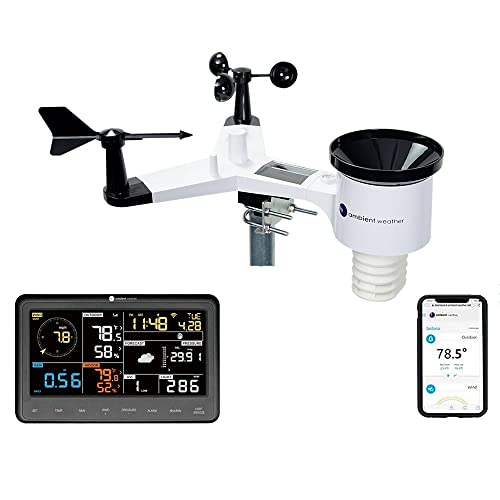
Ambient Weather WS-2902
Choose it when you want the main weather variables, a local display, and online dashboards without paying for the WS-2000’s TFT console, separate indoor sensor, and broader expansion platform.
Confirm the exact current revision, included console, array, power adapters, and mounting hardware. Older A/B/C setup instructions may not match a currently shipped D-family console.
WS-2902 specifications at a glance
| Decision point | What readers should know |
|---|---|
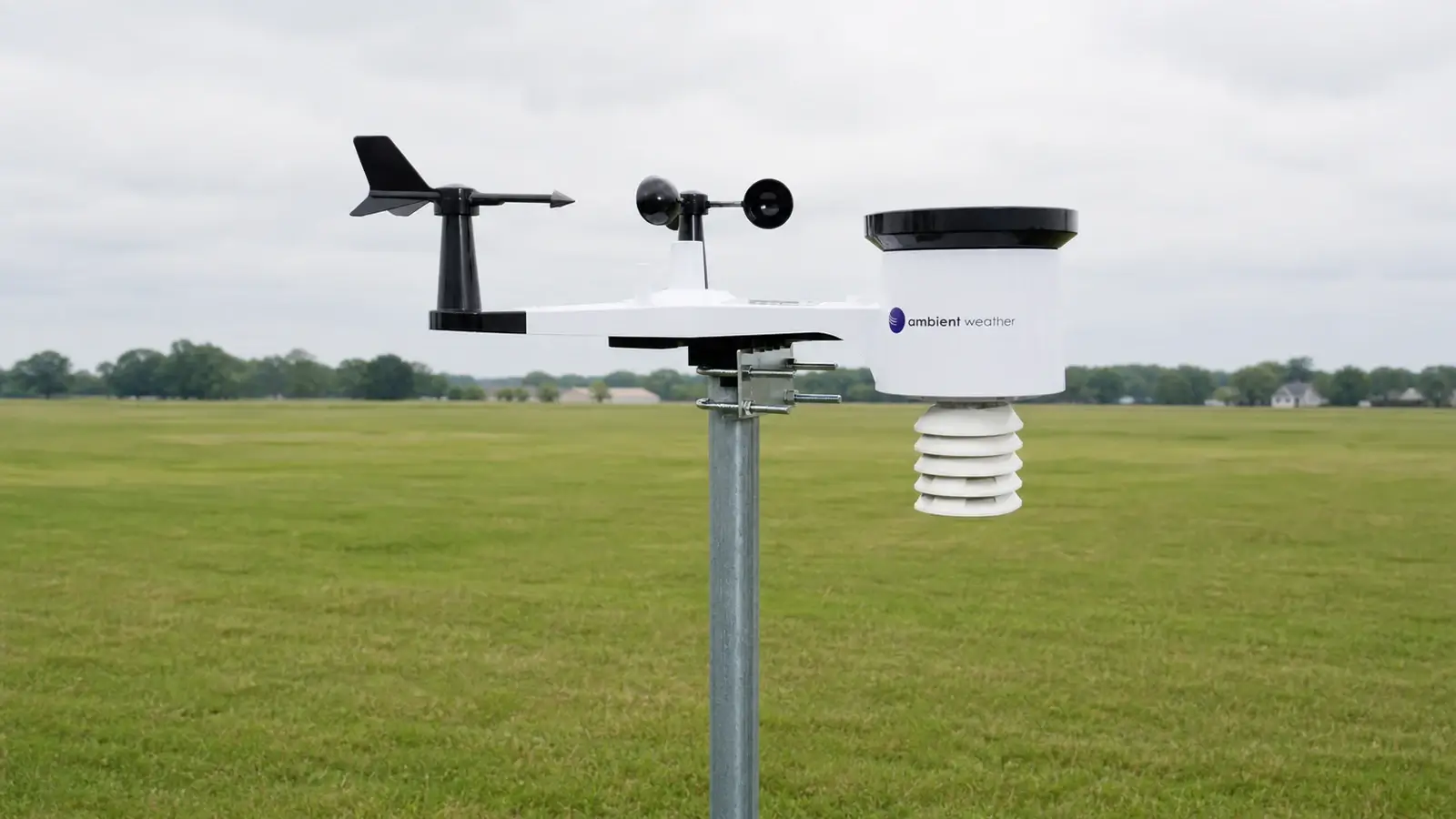
| Outdoor measurements | Temperature, humidity, wind speed and direction, rainfall, UV, and solar radiation from the integrated Osprey-style array. |
| Indoor measurements | Indoor temperature, humidity, and barometric pressure are normally measured at the console. |
| Outdoor cadence | Core outdoor observations update on a 16-second cycle, console display and internet uploads are not necessarily the same interval. |
| Wireless range | Manufacturer ratings are stated under open-air conditions. Walls, metal, electronics, and batteries reduce practical range. |
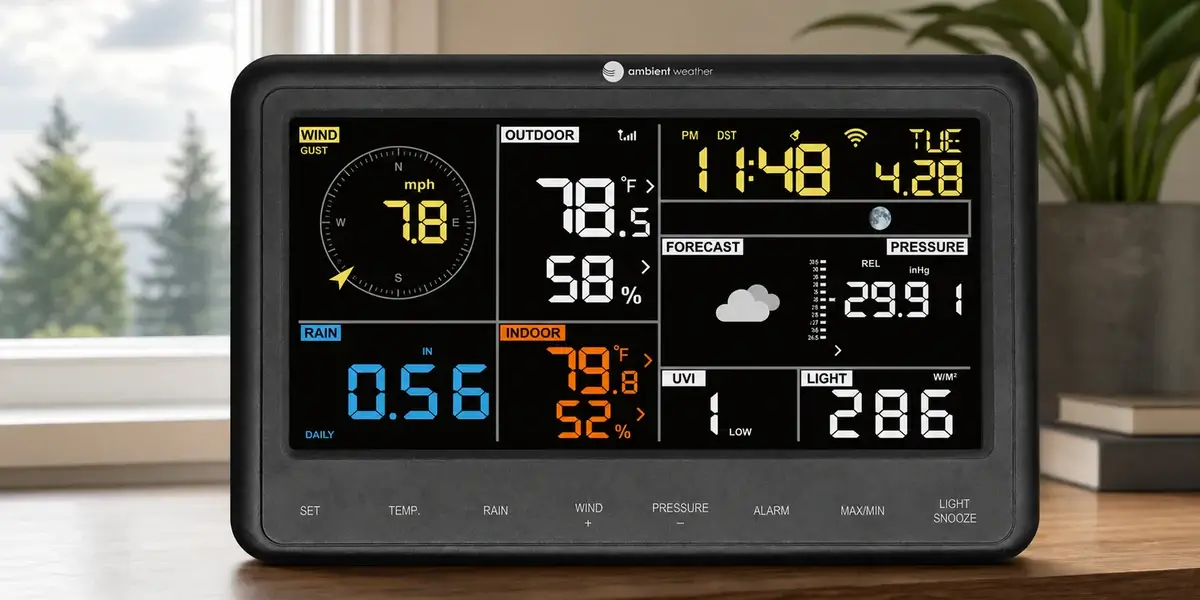
| Display | Compact color-film LCD with physical buttons. It is information rich but best viewed near straight on. |
| Internet | Built-in Wi-Fi publishing to the Ambient Weather Network and supported third-party services, exact setup differs by revision. |
| Power | Outdoor array is solar assisted and uses backup batteries. Console normally requires its AC adapter for full operation and Wi-Fi. |
| Mounting | The array needs a separate mast or mounting structure that is rigid, plumb, safely serviceable, and appropriate for the site. |
What the WS-2902 does—and why it still sells
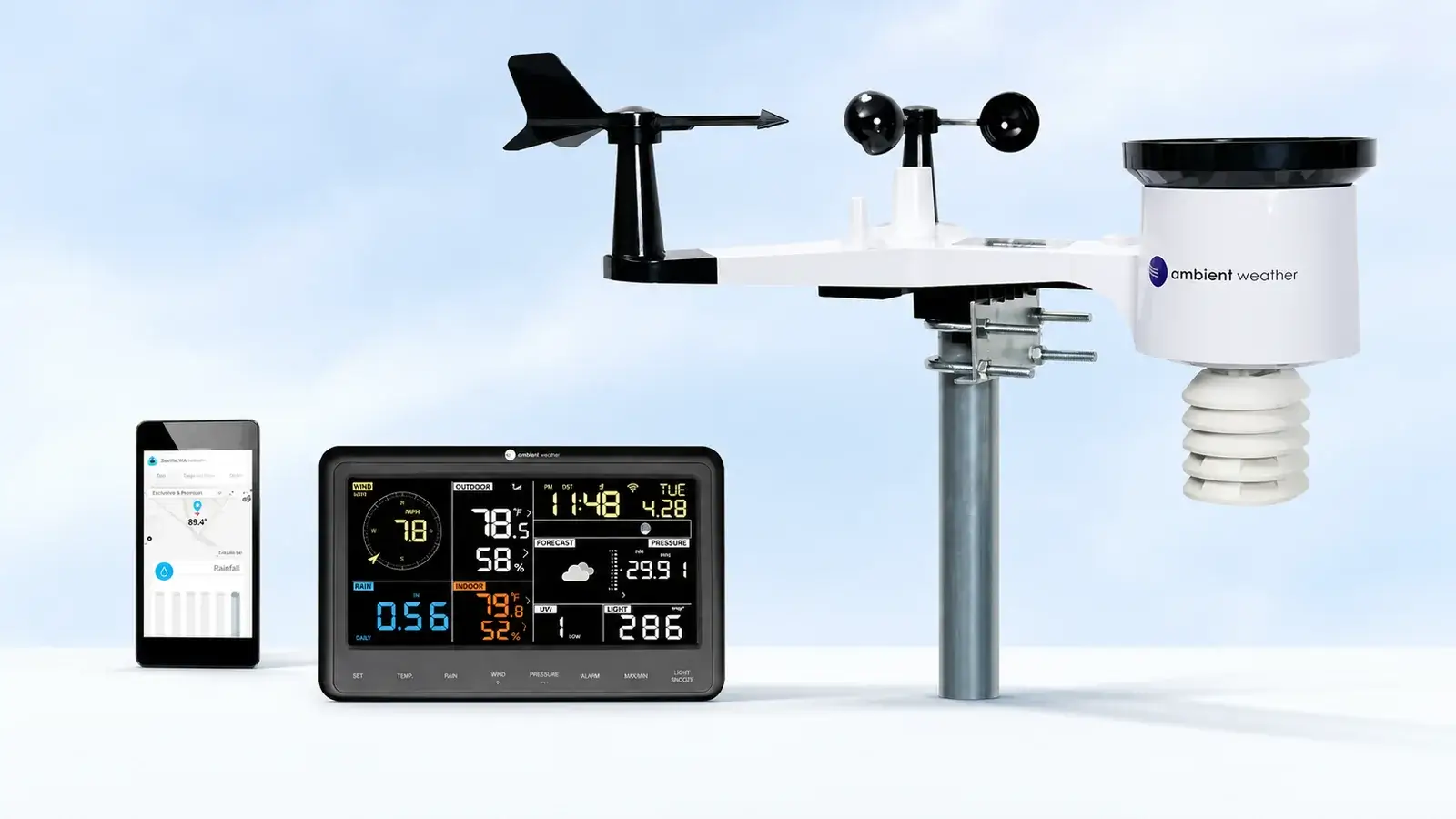
The WS-2902 puts nearly every observation a homeowner expects into one compact outdoor array: temperature, humidity, rain, wind speed, wind direction, UV, and solar radiation. The indoor console adds indoor temperature, humidity, and pressure, then publishes compatible readings online through the home Wi-Fi network. For a first serious personal station, that is a broad capability set without a separate gateway or premium console.
The strongest value argument is the shared outdoor-array architecture. The WS-2000’s higher price does not buy a fundamentally different anemometer or rain collector. It mainly buys a higher-quality TFT console, separate indoor sensor, easier local controls, and a broader expansion system. If those advantages will not be used, spending the difference on a sound mast and better siting often improves the real observation more.
Accuracy and the all-in-one siting compromise
The array can produce useful backyard observations, but “accuracy” depends on the variable and exposure. A compact array is convenient precisely because every instrument shares one mount. That convenience also makes a formal ideal impossible: wind wants height and clean exposure, while temperature and humidity usually want representative ground exposure, rain wants an unobstructed, level collector.
Start with an open, serviceable location over natural ground. Keep the array away from roof heat, reflective walls, dryer and HVAC exhaust, irrigation, tree drip, and turbulent edges. The mast must be plumb and the rain collector level. A believable number from a poor location is not proof of an accurate observation.
- Temperature: compare during stable conditions and investigate reflected heat or weak airflow before changing calibration.
- Rain: inspect for insects, seeds, splash, and tilt, compare complete storms rather than one five-minute burst.
- Wind: a backyard mast among roofs and trees will not match an airport anemometer at standard height.
- Pressure: confirm elevation, units, and whether the reference shows station or sea-level pressure.
- UV and solar: keep the top sensor clean and clear of shade. Rapid cloud-driven changes can be real.
The console is useful—but it is the main compromise
The color-film LCD presents a dense overview of current conditions and derived values. It is compact, power efficient, and adequate when placed at eye level and viewed close to straight on. Contrast and color can look weaker from the side or across a bright room. That limitation matters more to a household that expects the console to function like a wall dashboard than to an owner who checks the phone or web dashboard most of the time.
Because indoor temperature, humidity, and pressure are normally measured at the console, its placement also affects the indoor observation. Avoid a sunny sill, exterior door, television, kitchen heat source, or supply vent. This is a meaningful difference from the WS-2000, whose separate indoor sensor lets the screen and measurement point live in different places.
Wi-Fi, revision confusion, and optional sensors
The current product family connects to the Ambient Weather Network and can support online dashboards, history, alerts, public sharing, and supported integrations. The array-to-console radio connection and console-to-router Wi-Fi connection are separate links. Diagnosing “offline” starts with identifying which link failed.
Old setup guides often refer to WS-2902A, B, or C. Current product material may use the broader WS-2902 name while pointing to a D-family manual. Button sequences, setup screens, firmware, and optional-sensor compatibility can differ. Follow the manual packaged with the exact console and verify the suffix on the label before using an older video or article.
Current revisions can support selected additional sensors, so the old claim that the WS-2902 is never expandable is too broad. The compatible set is still narrower and more revision dependent than the WS-2000 platform. Before buying an add-on, verify model number, console revision, channel limit, and whether the data appears locally, online, or both.
Installation, maintenance, and owner-reported issues
The station does not eliminate the cost or judgment of mounting. Choose a galvanized or stainless structure with the correct diameter, minimal flex, safe access, and a route that does not create a fall or lightning hazard. Photograph the final exposure and record mast height, orientation, nearby obstructions, units, elevation, firmware, and calibration settings.
Seasonally—and after severe weather—inspect the collector, louvered shield, solar surface, wind cups, vane, mounting collar, and mast. Clear debris gently, keep water away from electronics, and replace backup batteries as a set using the current manual’s recommended chemistry. Revalidate after moving the station or changing a router, console, battery, or sensor assembly.
Independent reviewers and owners report both long service and individual failures, rain discrepancies, RF interruptions, or setup frustration. Those anecdotes help readers know what to inspect, but they are not a measured defect rate. A responsible review distinguishes a recurring troubleshooting theme from proof that every unit has the same problem.
Who should buy the WS-2902?
Value and core observations lead
- You want wind, rain, temperature, humidity, pressure, UV, and solar data in one package.
- You expect to view most detail, history, and alerts online.
- You can place the small console near a direct viewing angle.
- You do not expect a large specialized sensor network.
- You would rather spend the budget difference on a better mast and location.
The compromise hits your priority
- Choose WS-2000 for a much better local display, separate indoor sensor, and broader add-ons.
- Choose WS-5000 for a separable ultrasonic wind system and faster wind response.
- Choose Vantage Vue for longer rated radio range, fast wind updates, and a rugged compact suite.
- Choose Vantage Pro2 when separable wind placement and field-system flexibility justify the cost.
Pros and limitations
- Broad core measurement set for the price.
- Built-in Wi-Fi and mature online dashboard ecosystem.
- Straightforward integrated array and widely available replacement parts.
- Same basic outdoor measurement architecture as the WS-2000 package.
- Good first serious station when mounted and maintained carefully.
- Color-film display is sensitive to viewing angle and room light.
- Indoor measurement point is tied to console placement.
- Revision-specific setup and compatibility can confuse old instructions.
- Integrated array forces a wind-versus-temperature/rain siting compromise.
- Optional-sensor system is narrower than the WS-2000 platform.
Frequently asked questions
Is the WS-2902 still worth buying in 2026?
Yes for buyers who want complete core observations, online access, and strong value. The WS-2000 is worth more when its TFT display, separate indoor sensor, or larger expansion system will actually be used.
What is the difference between WS-2902C and WS-2902D?
They are console/product revisions within the same family. Setup screens, firmware, and compatible add-ons can differ, so use the manual and label for the exact unit received rather than assuming an older guide applies.
Is the WS-2902 accurate?
It can provide useful observations when correctly sited, leveled, configured, and maintained. Accuracy varies by sensor, and roof heat, shade, turbulence, splash, collector tilt, elevation, and comparison method can dominate the result.
Can it use extra sensors?
Some current revisions support selected additional sensors. Compatibility is narrower and more revision dependent than the WS-2000, so verify the exact sensor model, console suffix, firmware, channel limit, and display destination.
Does it need Wi-Fi to show local weather?
The console receives local observations from the outdoor array over a separate radio link. Wi-Fi is needed for internet uploads, remote dashboards, and supported integrations, not for the basic array-to-console display.
Is the WS-2000 more accurate?
Not inherently for the shared core outdoor measurements. It mainly upgrades the console, separates indoor sensing from screen placement, and supports a broader sensor ecosystem.
Bottom line
The WS-2902 remains one of the most rational value choices for a first serious home weather station. Its biggest limitations are the modest viewing-angle-sensitive display, console-based indoor sensing, and revision-sensitive expansion guidance—not a lack of core weather capability. Put it in a defensible location, maintain it, and use the online dashboard. Choose the WS-2000 only when its better platform solves a need you actually have.
Related Station Guides
Use these practical guides to get more reliable readings and a better ownership experience:
- All-in-one station tradeoffs — Learn where integrated arrays simplify setup and where shared placement creates compromises.
- Installation and siting — Place the sensors where buildings, pavement, trees, and roofs will not bias the readings.
- Share station data online — See why owners publish observations and what to consider before connecting a network.
Sources and review basis
This is an evidence-checked review based on current manufacturer product pages, manuals, support documentation, and clearly labeled owner/reviewer observations. WXObservation did not assign a laboratory score or claim long-term hands-on ownership of this unit.