
Ambient Weather WS-2000 Review: Who Should Buy It in 2026?
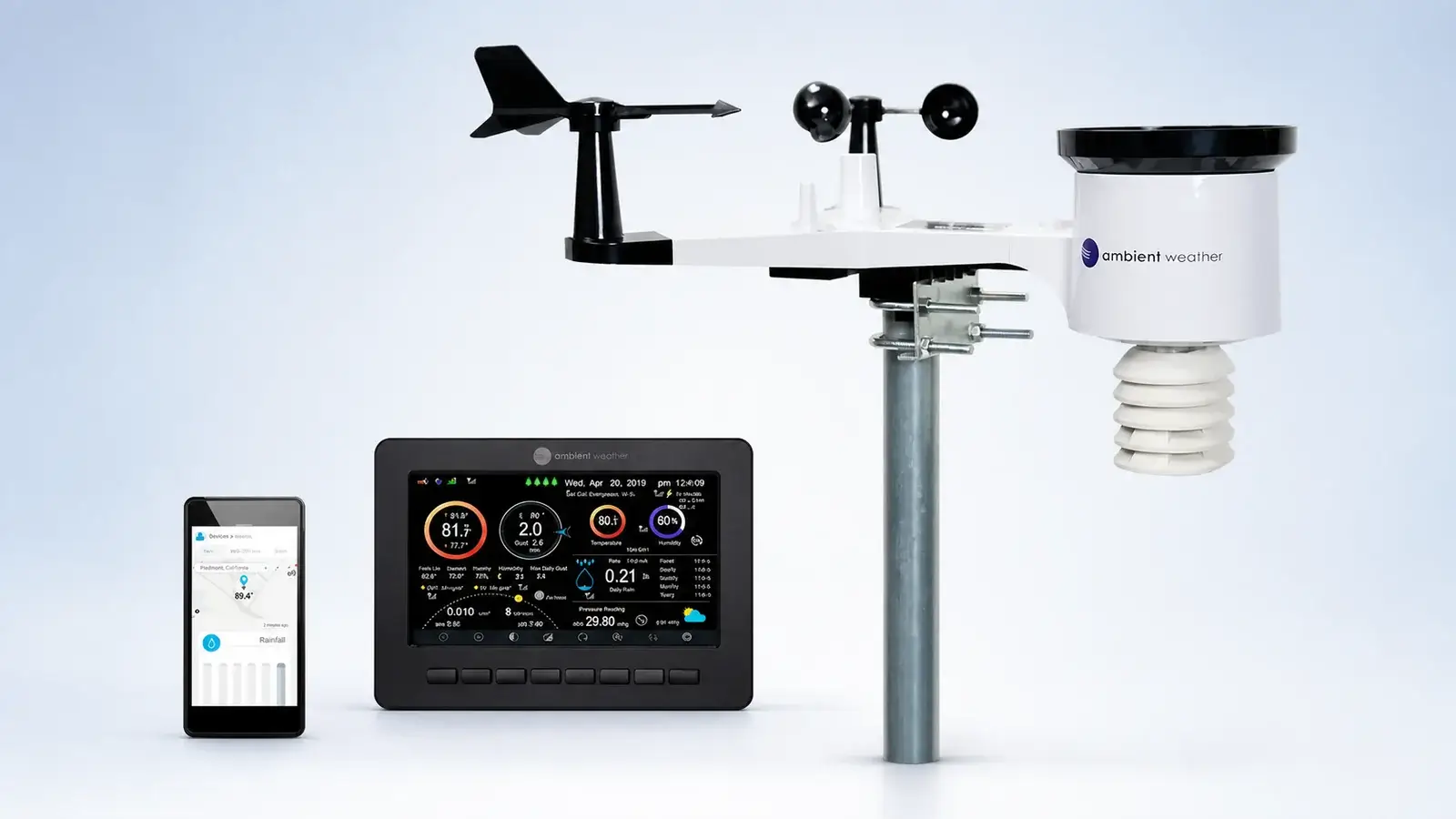
The WS-2000 is Ambient Weather’s console-and-expansion upgrade for enthusiasts who value a strong local display, separate indoor sensing, and room to add specialized sensors.
Affiliate disclosure: WXObservation may earn a commission from qualifying Amazon purchases, at no additional cost to you. Availability, seller, bundle contents, and prices can change, confirm the current listing before ordering.
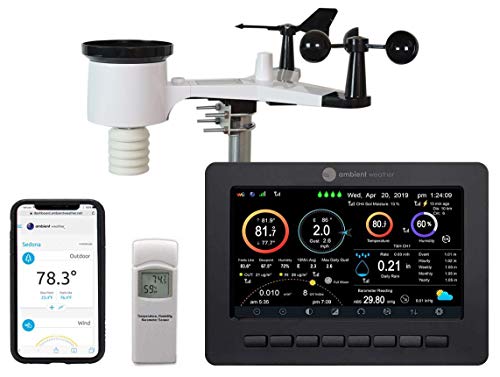
Ambient Weather WS-2000
Choose the WS-2000 when the local screen will be read often, indoor measurements should not be tied to the console’s location, or you expect to add lightning, soil, leak, particulate, temperature, probe, or other compatible sensors.
Confirm the listing includes the TFT console, WH65-style outdoor array, WH32B indoor sensor, power adapters, and mounting hardware you expect.
WS-2000 specifications at a glance
| Decision point | What the current system provides |
|---|---|
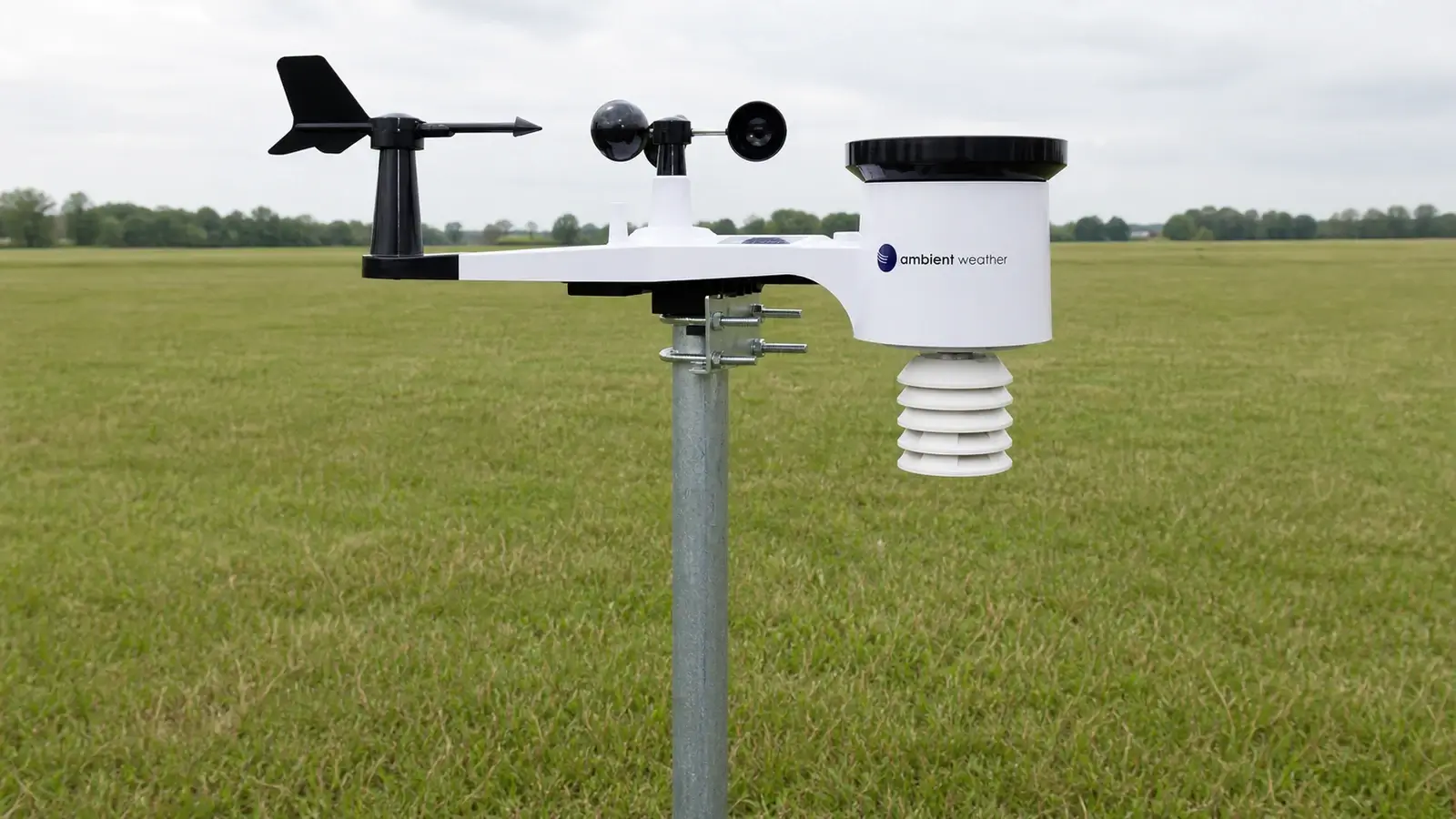
| Outdoor measurements | Temperature, humidity, wind speed and direction, rainfall, UV, and solar radiation from the integrated WH65/Osprey-style array. |
| Indoor measurements | Temperature, humidity, and barometric pressure from the included separate WH32B sensor. |
| Outdoor update cadence | The shared outdoor array sends core observations on a 16-second cycle. Online publishing and optional sensors can follow different intervals. |
| Radio range | Ambient rates the array-to-console link up to 300 ft line of sight and about 100 ft under typical obstructed conditions. |
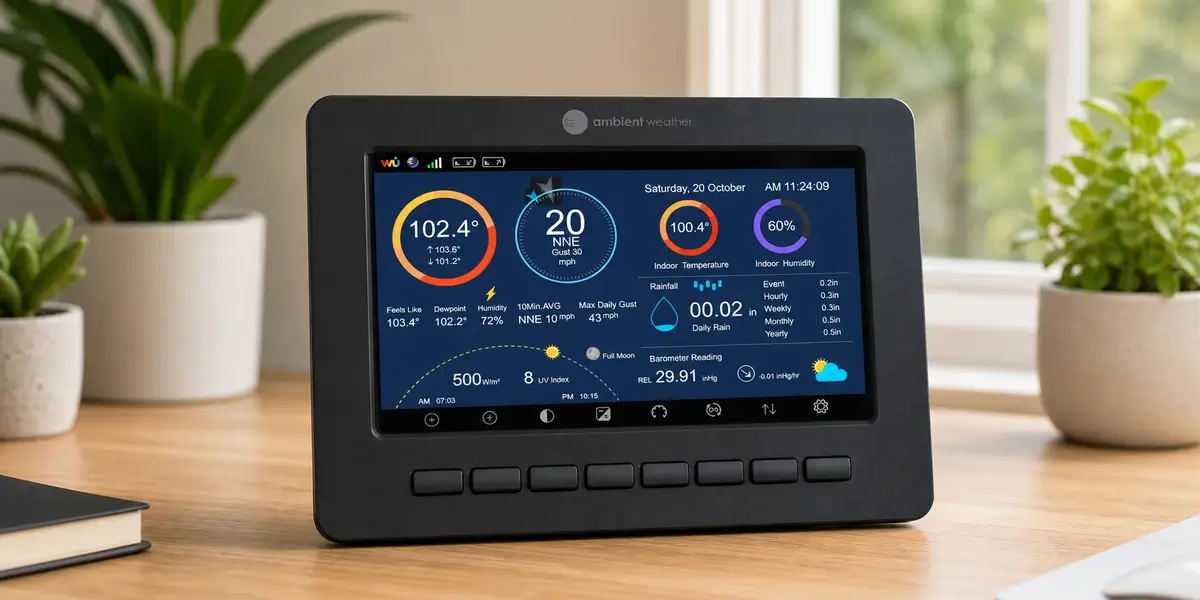
| Console | High-definition TFT color display with physical buttons, light/dark backgrounds, alarms, calibration, history, and SD-card functions. |
| Internet | Wi-Fi publishing to the Ambient Weather Network and supported third-party services. Local display still handles observations when the internet is unavailable. |
| Power | Outdoor array uses its small solar panel to assist operation and requires backup batteries. Console normally uses its AC adapter. |
| Mounting | Mounting hardware is included for a compatible mast, but the mast or complete mounting structure may be a separate purchase. |
What is included—and what the premium actually buys
The WS-2000 combines three pieces that readers often blur together. The outdoor WH65-style array is responsible for wind, rain, outdoor temperature and humidity, UV, and solar radiation. The small WH32B sensor supplies indoor temperature, indoor humidity, and barometric pressure. The console receives those signals, displays and archives observations, manages calibration and alarms, connects to Wi-Fi, and accepts compatible optional sensors.
The important buying lesson is that the premium is concentrated inside the house. Ambient’s WS-2902 uses the same basic integrated outdoor-array architecture. Paying more for the WS-2000 does not place a better thermometer, anemometer, or rain gauge outside. It buys a far better console, independent indoor-sensor placement, easier local management, and a larger expansion ecosystem.
Accuracy: capable hardware still depends on the site
“How accurate is the WS-2000?” does not have one honest number. Each sensor has its own manufacturer tolerance and update cadence, and the installation can introduce a larger error than the instrument specification. A roof, south-facing wall, air-conditioner, paved surface, tree canopy, sprinkler, or unlevel rain collector can make a reasonable sensor produce an unrepresentative observation.
The compact array also forces a compromise. Temperature and humidity are usually best measured closer to representative natural ground, rain needs a level collector open to the sky, and wind is best higher and clearer of turbulence. One integrated housing cannot satisfy every formal exposure ideal at once. For most homes, an open, serviceable mast over natural ground is the most defensible compromise. Document the height and nearby obstructions so future comparisons have context.
- Temperature and humidity: compare after the shield has equilibrated, not while sun or irrigation is changing the site.
- Rain: keep the collector level and free of insects, seeds, and splash. Compare storm totals, not one short burst.
- Wind: expect a low backyard mast to read lower than a well-exposed airport anemometer.
- Pressure: enter the correct elevation and distinguish station pressure from sea-level-adjusted pressure.
- UV and solar: keep the top sensor clean and unshaded, and remember that clouds can cause fast legitimate changes.
TFT display and separate indoor sensing
The WS-2000 console is wide, colorful, and information dense. It offers selectable display backgrounds, min/max records with timestamps, alarms, calibration controls, and history. An optional SD card can be used for exported data and firmware-related tasks described in the manual. The interface still relies on physical buttons, which is less phone-like than a touchscreen but also keeps core local controls available without an app.
The separate WH32B is easy to undervalue. On stations that measure indoor conditions at the console, moving the screen near a sunny window, television, exterior door, or kitchen also moves the indoor measurement point. With the WS-2000, the display can sit where it is readable while the small indoor sensor sits where temperature, humidity, and pressure are more representative.
Optional sensors: the strongest reason to choose this platform
Ambient’s current WS-2000 manual lists support for indoor air quality, indoor and outdoor particulate monitoring, additional thermo-hygrometers, waterproof temperature probes, soil-moisture sensors, a lightning detector, and leak detectors. The precise number of channels depends on sensor type and firmware. “Expandable” does not mean that every Ambient sensor works, that every type can be added without limit, or that every reading appears identically on the console and online.
Temperature and humidity
Additional room sensors and waterproof probes can monitor a basement, greenhouse, refrigerator, freezer, pool, or other distinct location when the exact model is compatible.
Leaks and lightning
Compatible leak detectors and the WH31L lightning detector add useful awareness, but they supplement—not replace—official alerts, radar, and direct inspection.
Soil, particles, and air
Soil-moisture, PM2.5, and air-quality options can turn the console into a broader environmental hub, with model-specific channel and display limits.
Before ordering any add-on, match its exact model number to the current compatibility chart and manual. Check required firmware, channel limit, whether the console displays it locally, whether it uploads online, and what batteries or gateway it needs.
Wi-Fi, cloud, app, and local records
The WS-2000 can publish through Wi-Fi to the Ambient Weather Network, where owners can view dashboards, charts, history, alerts, and public or private station data. Ambient also documents integrations and APIs whose exact capabilities can change over time. The physical console remains useful during an internet outage because the array-to-console radio link is separate from the home’s internet connection, although cloud uploads and remote viewing pause until connectivity returns.
Before adding another receiver, see our guide to consoles, apps, and gateways. It explains which jobs the WS-2000 console already handles and what to verify before buying extra hardware.
Installation, maintenance, and ownership realities
Budget for the mount as well as the station. The integrated array needs a rigid mast with the correct diameter, a plumb orientation, and safe access for cleaning and battery changes. A freestanding yard mast often produces a more representative temperature and rain compromise than a hot roof, while a roof may offer better wind exposure but make maintenance harder and introduce heat and turbulence.
Routine ownership is straightforward but not maintenance free. Inspect the rain collector, radiation shield, solar surface, wind cups, vane, fasteners, and mast after severe weather and at least seasonally. Replace batteries as a set with the chemistry the manual recommends. Note any calibration change and photograph the site so a new tree, fence, shed, or roofline can be recognized as an exposure change rather than a sensor failure.
Owner reports mention occasional RF interference, individual sensor failures, and console or setup frustrations. Those reports are useful warnings, not failure-rate data. Start with distance, batteries, metal barriers, nearby electronics, firmware, and a controlled side-by-side reset before concluding that a component is defective.
Who should buy the WS-2000?
Display and growth matter
- The local console will be read frequently or from across a room.
- Indoor readings should come from a location separate from the screen.
- You plan to add multiple rooms or specialized environmental sensors.
- You value on-console calibration, alarms, history, and sensor management.
- You want a mature value-to-capability balance below a Davis field system.
Your priority is different
- Choose the WS-2902 when core measurements and online access matter more than the console.
- Choose the WS-5000 when faster wind updates or a separable ultrasonic wind system justify the premium.
- Choose Vantage Vue when long radio range, fast wind updates, and a compact rugged suite matter more than price.
- Choose Vantage Pro2 when a separable anemometer and more formal field placement are the priority.
Pros and limitations
- Excellent dedicated local display for this price class.
- Separate indoor temperature-humidity-pressure sensor.
- Broad optional-sensor ecosystem with useful specialized categories.
- Wi-Fi publishing without a separate internet bridge.
- Replaceable components and a well-documented support library.
- The shared integrated outdoor array imposes a siting compromise.
- Physical buttons and menus are less immediate than a modern touchscreen.
- Wireless range is highly site dependent despite the line-of-sight rating.
- Optional-sensor compatibility and channel limits require careful checking.
- The platform costs more than the WS-2902 without inherently improving the shared array.
Frequently asked questions
What does the WS-2000’s higher price buy?
Primarily a much better display, separate indoor-sensor placement, stronger local controls, and broader expansion options—not a fundamentally different integrated outdoor array. For a direct two-model buying decision, read our WS-2000 vs. WS-2902 comparison.
Does the WS-2000 work without Wi-Fi?
The console can receive and display local sensor data through its separate radio link when the internet is unavailable. Its Wi-Fi internet connection supports cloud uploads and remote viewing. See our Wi-Fi and offline-use guide for the distinction between local display, saved history and recovery after an outage.
How far can the outdoor array be from the console?
Ambient rates the link up to 300 ft line of sight and roughly 100 ft under typical obstructed conditions. Metal, walls, low batteries, and nearby electronics can reduce usable range.
Can I add a lightning detector or soil sensor?
The current manual lists compatible lightning, soil-moisture, leak, particulate, air-quality, temperature/humidity, and probe sensors. Verify the exact model, firmware, channel limit, and where its data appears before buying.
Does the solar panel charge the backup batteries?
Do not assume it does. Follow the current manual’s battery and power instructions. Treat the batteries as required backup power and replace them with the recommended type when needed.
Is the WS-2000 worth the extra cost?
Yes when the TFT console, separate indoor sensor, or expansion system will be used. If those features do not matter, the WS-2902 usually delivers the same core outdoor observations for less.
Bottom line
The WS-2000 is one of the most balanced enthusiast weather stations in its price class when the console and expansion ecosystem will be used. Its outdoor array is capable but not magical. The site, mount, and maintenance still determine whether the readings describe your property well. Buy it over the WS-2902 for the better way to view, place, and expand the system—not for a fundamentally different outdoor measurement package.
Related Station Guides
Use these practical guides to get more reliable readings and a better ownership experience:
- All-in-one station tradeoffs — Learn where integrated arrays simplify setup and where shared placement creates compromises.
- Installation and siting — Place the sensors where buildings, pavement, trees, and roofs will not bias the readings.
- Share station data online — See why owners publish observations and what to consider before connecting a network.
Sources and review basis
This evidence-checked review was verified against Ambient Weather’s current product page, manual, support documentation, and clearly labeled owner and independent-review observations.