
All-in-One Weather Stations: Advantages, Limits, and Better Siting
A balanced guide to the convenience of integrated sensor arrays, the exposure compromises they create, and when separate sensors are worth it.
Three common station architectures
| Architecture | What it means | Best for | Main tradeoff |
|---|---|---|---|
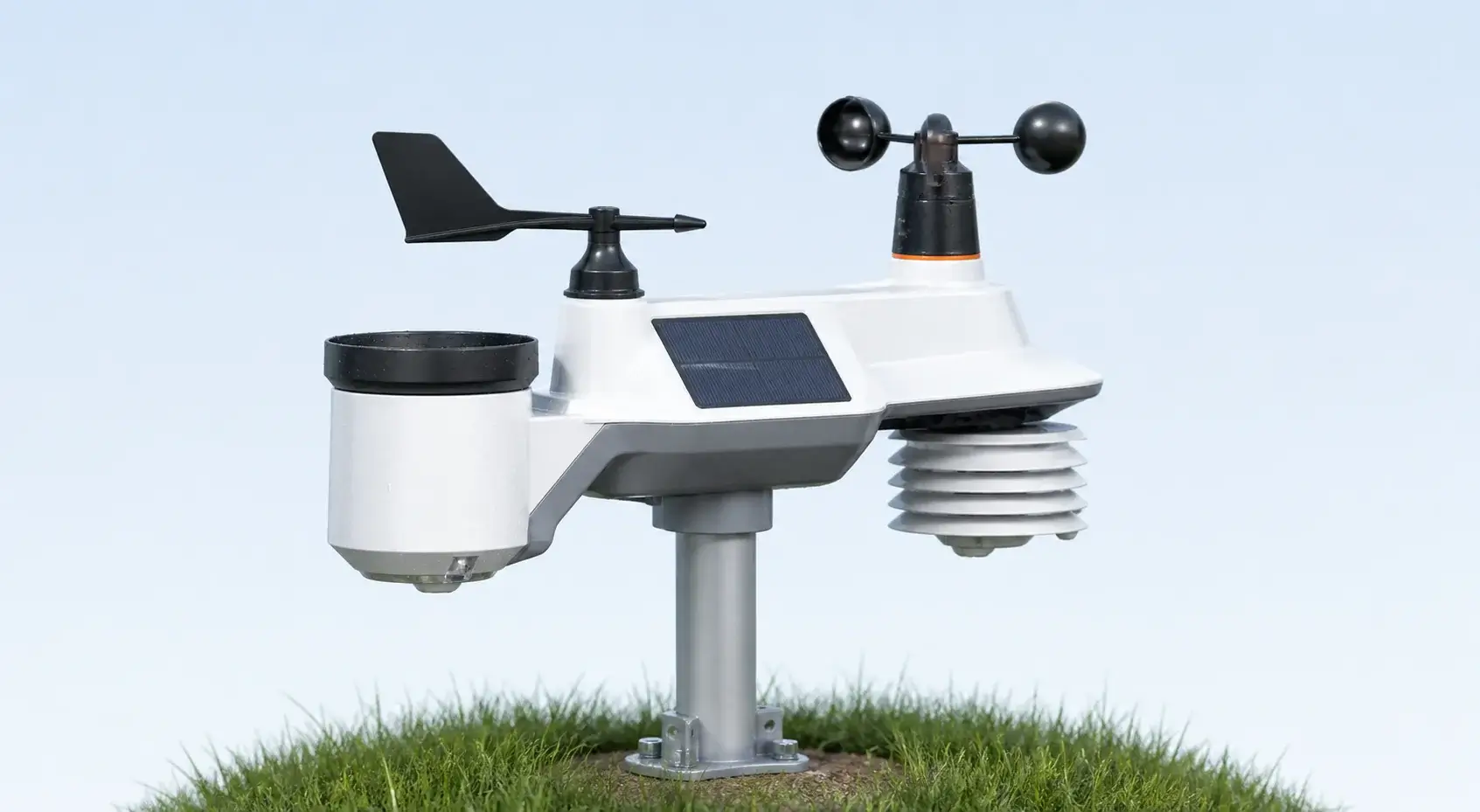
| All-in-one array | Most outdoor sensors share one body and mounting point. | Most first-time owners, smaller properties, straightforward installation. | One site must compromise between wind, rain, temperature, and humidity exposure. |
| Partly separable | The main array stays integrated, but the anemometer or other sensor can be relocated. | Owners who want better wind exposure without building a fully modular system. | More wiring, hardware, cost, and configuration than a single array. |
| Modular | Wind, precipitation, temperature/humidity, and optional sensors can use separate locations. | Enthusiasts, agriculture, research, and sites where measurement quality outweighs simplicity. | Higher cost, more mounting points, and more maintenance. |
Wind
High and clear
Wind speed and direction benefit from height and clean airflow away from roofs, trees, and walls.
Temperature & humidity
Representative and ventilated
These measurements benefit from a shielded, ventilated site over representative ground and away from heat sources.
Rainfall
Level and unobstructed
The collector must be level, open to precipitation, and protected from splash, drip, runoff, and wind shadows.
Why all-in-one stations remain popular
One assembly and one mount
Fewer separate brackets, cables, radio channels, and alignment steps make installation easier.
More measurements per dollar
Integrated consumer arrays often include wind, rain, temperature, humidity, UV, and solar measurements at a price below a modular system.
Less visual and physical clutter
A single mast is easier to fit into many yards and typically requires fewer maintenance locations.
One console or gateway
Current systems commonly present all measurements in one app, console, or online dashboard.
Good for learning
Owners can begin observing local weather without designing a professional-style instrument field.
Consistency still has value
A well-sited, maintained consumer station can provide useful local trends even when it cannot meet every formal exposure standard.
Current all-in-one examples
Affiliate disclosure: WXObservation may earn a commission from qualifying Amazon purchases at no additional cost to you.
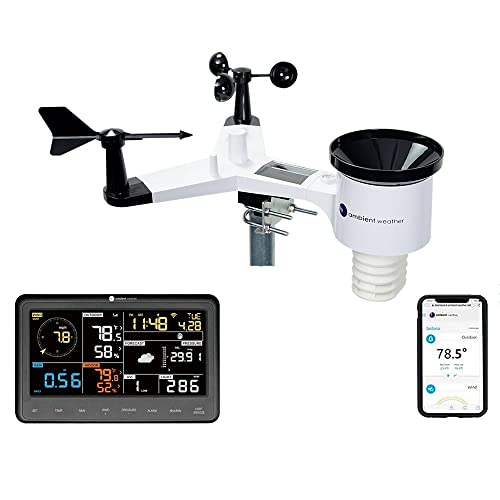
Solar primary · backup batteries
Ambient Weather WS-2902
A conventional integrated array with wind, rain, temperature, humidity, UV, and solar measurements.
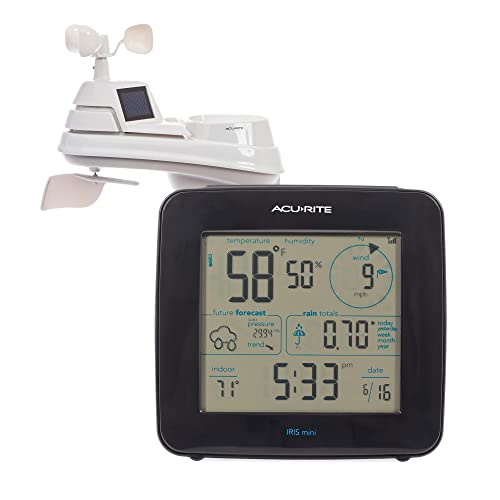
Battery primary · solar-assisted fan
AcuRite Iris
A compact integrated array that illustrates a battery-powered sensor suite with solar-assisted ventilation.
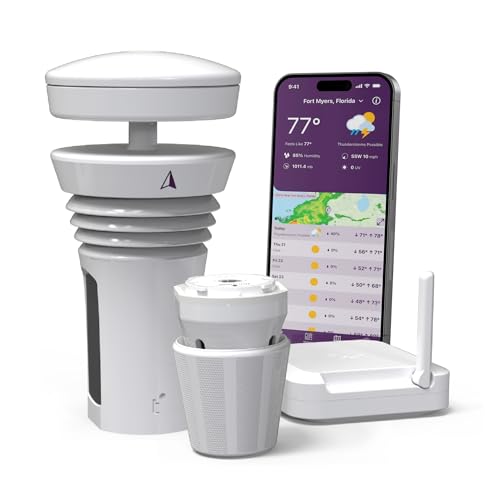
Sonic wind · haptic rain · solar charging
WeatherFlow Tempest
A compact design without moving wind cups or a tipping-bucket rain collector. Confirm seller and warranty eligibility on Amazon.
Where the compromise shows up
The 2026 field study of compact all-in-one systems published in Atmospheric Measurement Techniques found that these stations can produce scientifically useful observations, but long-term performance depends on sensor design, exposure, and maintenance. Precipitation was the weakest measurement across the tested compact systems, and wind and humidity performance also varied as equipment aged.
Temperature can inherit the wind site
Raising an integrated array for wind may put the temperature sensor near a hot roof or outside the standard near-surface observing height. A radiation shield helps with sunlight. It does not erase nearby heat sources or poor airflow.
Wind can inherit the temperature site
Keeping the array low over representative ground can improve temperature and service access while leaving wind cups or a sonic sensor inside turbulence from houses, fences, and trees.
Rain can inherit both compromises
A high or roof-mounted collector is harder to level and clean and may experience wind undercatch. A low collector near objects can suffer splash, drip, and blockage.
One failure can affect the whole suite
Some integrated arrays make individual sensor replacement difficult. Check whether the manufacturer sells replaceable components and how long the system retains data during service.
Which architecture fits you?
Choose all-in-one when…
- You want a capable first station with manageable cost and setup.
- Your property has one reasonably open, serviceable location.
- Local trends and convenience matter more than matching a professional network exposure.
- You are willing to document the compromise and maintain the array.
Choose separable or modular when…
- Accurate wind exposure is a priority.
- You can place temperature/rain instruments in one area and the anemometer higher elsewhere.
- You need specialized soil, leaf-wetness, solar-radiation, air-quality, or redundant sensors.
- Replaceability, calibration, or long service life justifies the extra cost.
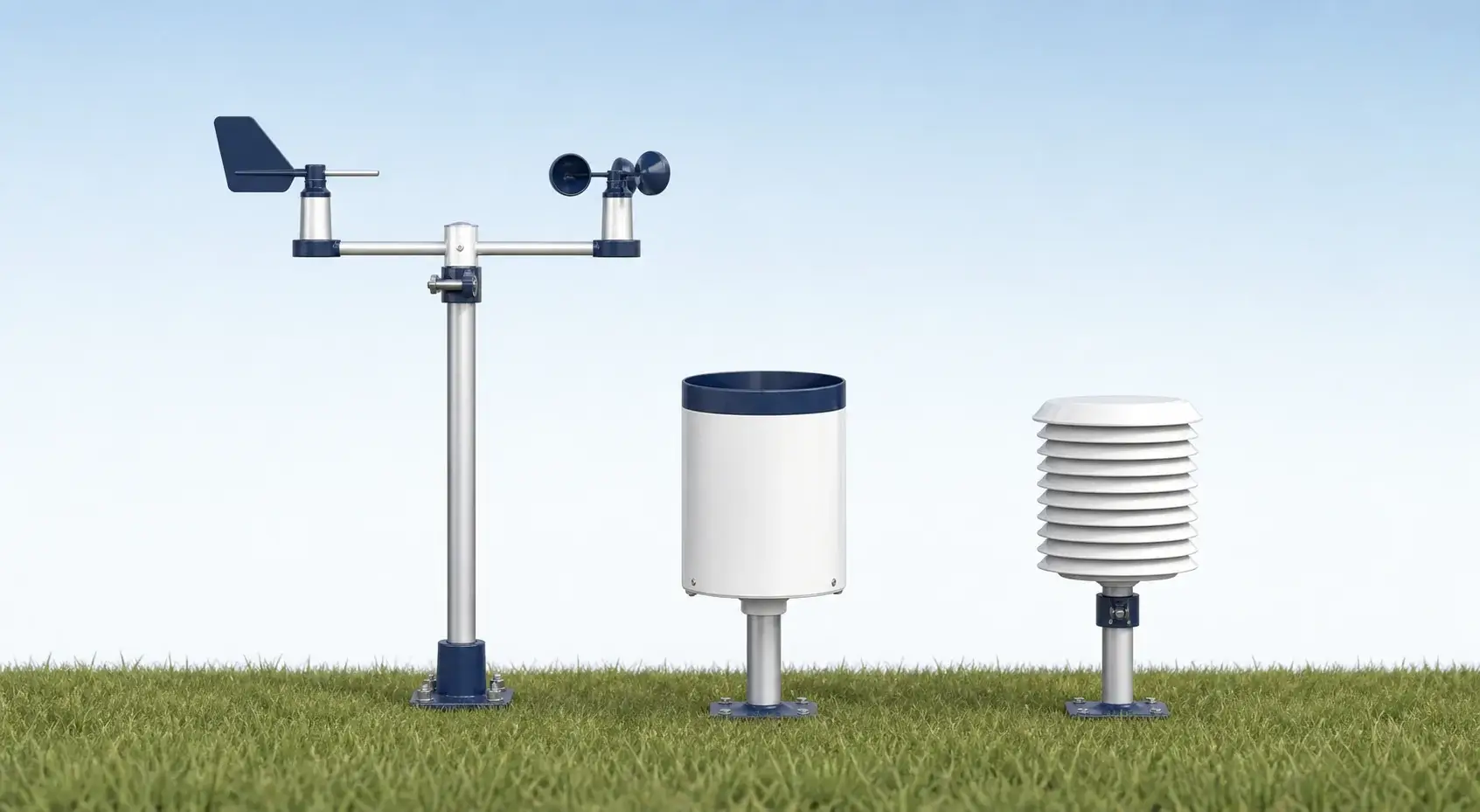
Match the architecture to the measurement you care about most
If your priority is a convenient neighborhood snapshot, an integrated array in a thoughtfully chosen yard location is usually the sensible starting point. If wind is the main measurement, a system with a separable anemometer lets you place it higher and farther from turbulence while keeping temperature, humidity, and rainfall closer to representative ground. For rainfall-focused gardening, easy access for leveling and funnel cleaning may matter more than maximum wind height.
Also consider what happens after installation. A modular system can make one failed sensor easier to replace, but it adds mounting points, radio links, cables, batteries, and configuration choices. An all-in-one station reduces that complexity and often costs less. Neither architecture guarantees accuracy: exposure, maintenance, sensor design, and careful validation still determine whether the readings describe the place you intended to measure.
Get better readings from an integrated array
- Read the model manual before choosing the mount or drilling.
- Favor an open, level, serviceable site away from roofs, pavement, vents, irrigation, and tree drip.
- If wind is the priority, raise the array into cleaner airflow without creating unsafe access.
- Level the rain collector and recheck it after tightening the mount.
- Keep the radiation shield, rain funnel, solar surface, wind cups, vane, and sensor openings clean.
- Compare trends—not one instant reading—with multiple nearby trusted stations.
- Correct siting and maintenance problems before adding calibration offsets.
Use the installation and siting guide to choose a location, the mounting ideas guide for hardware, and the accuracy guide to troubleshoot suspicious readings.
FAQ
Are all-in-one weather stations accurate?
They can provide useful, consistent local observations when well sited and maintained. Accuracy varies by measurement, design, exposure, age, and maintenance. An integrated layout also makes it harder to give every sensor its ideal location.
Is a separate anemometer worth it?
It can be when wind accuracy matters and your main array must remain lower for temperature, humidity, and rainfall. The benefit depends on whether the station supports separation and whether you can build a safe, clear wind mount.
Where should an all-in-one station be installed?
For many homes, an open-yard mast over representative ground is the best compromise. Keep it away from hot surfaces, vents, irrigation, tree drip, and major obstructions, then follow the model-specific height and orientation instructions.
Do professional weather stations use all-in-one sensors?
Compact all-in-one sensors are used professionally in some applications, but formal observing networks choose equipment and exposure standards for their measurement goals. Home consumer arrays should not be assumed to meet the same class or siting standard.
Sources and further reading
These independent and official references support the design, siting, and measurement-quality guidance in this guide.
Consumer weather-station field evaluation — Peer-reviewed comparison of consumer weather-station observations and limitations.
Cornell NEWA installation best practices — Practical sensor placement and installation guidance.
NWS/CWOP personal weather-station siting guide — Official siting recommendations for temperature, rain, and wind sensors.