
Weather basics
Wind Chill vs. Heat Index: How “Feels Like” Temperatures Work
Wind chill and heat index translate temperature, wind, and humidity into human heat stress. They are useful safety tools—but they do not change the actual air temperature.

Quick answer
Wind chill and heat index are apparent-temperature indexes designed to describe how weather affects the human body. Wind chill combines cold air and wind because moving air accelerates heat loss from exposed skin. Heat index combines hot air and relative humidity because humidity slows the evaporation of sweat. Neither number is a new measurement of the air temperature.
The “feels like” number on a weather app is often more useful for planning clothing and outdoor activity than temperature alone. It is also easy to misread. A wind chill of 5°F cannot freeze a pipe when the actual air is 35°F, and a heat index is not the temperature of a sunny car dashboard. These indexes describe standardized human exposure under specified conditions.
Wind chill vs. heat index at a glance
| Wind chill | Heat index | |
|---|---|---|
| Inputs | Air temperature and wind speed | Air temperature and relative humidity |
| Main body process | Faster heat loss from exposed skin | Slower cooling as sweat evaporates less efficiently |
| Typical season | Cold weather | Hot, humid weather |
| Official calculation context | Shaded face-level exposure | Shaded, light-wind exposure |
| Main safety concern | Frostbite and hypothermia | Heat exhaustion and heat stroke |
Both indexes simplify a complicated energy balance. Clothing, direct sunshine, health, age, activity, acclimatization, wetness, shade, and wind exposure can make a person's experience different from the displayed value. Treat the number as a warning and planning tool, not a personal medical diagnosis.
What is wind chill?
Your body continually warms a thin layer of air next to your skin. Wind replaces that warmed layer with colder air, increasing the rate at which exposed skin loses heat. The wind chill temperature expresses that heat-loss rate as the temperature it would resemble in a standard low-wind setting.
The current U.S. and Canadian formula uses air temperature and wind speed measured at the standard observing height, with the wind adjusted to approximate face height. The National Weather Service generally displays the index for temperatures at or below 50°F and wind speeds above 3 mph. The lower the result, the faster unprotected skin can cool.
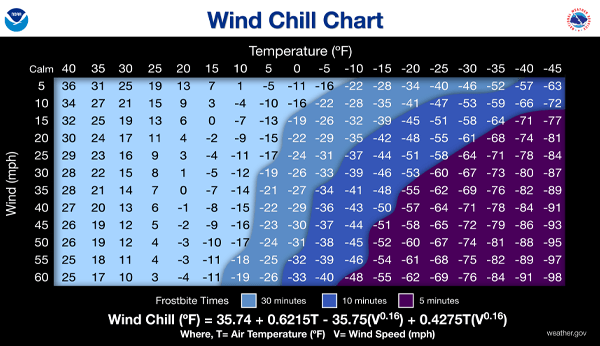
Wind chill does not make inanimate objects colder than the actual air. A metal chair at 20°F in a strong wind may cool to 20°F faster than it would in calm air, but it will not cool to a wind chill of 0°F. Evaporation can complicate wet surfaces, yet the basic rule still holds: wind chill is a human heat-loss index, not an object temperature.
Frostbite can develop quickly when the index becomes very low, especially on fingers, toes, ears, and the nose. The exact time varies with the person and exposure. Use the shaded frostbite zones on the official chart as risk guidance, not as a countdown that guarantees safety until a particular minute.
What is the heat index?
Sweat cools the body mainly when it evaporates. When the surrounding air already contains abundant water vapor, evaporation becomes less efficient. The heat index combines air temperature and relative humidity to express the resulting heat stress as an apparent temperature.
The commonly published National Weather Service heat index assumes shade and light wind. Direct sunlight may make conditions feel substantially hotter, and strenuous activity creates additional internal heat. Wind can improve evaporation in some situations, but very hot air and intense exposure remain dangerous. The index is most applicable within the warm, humid range for which its formula was developed.
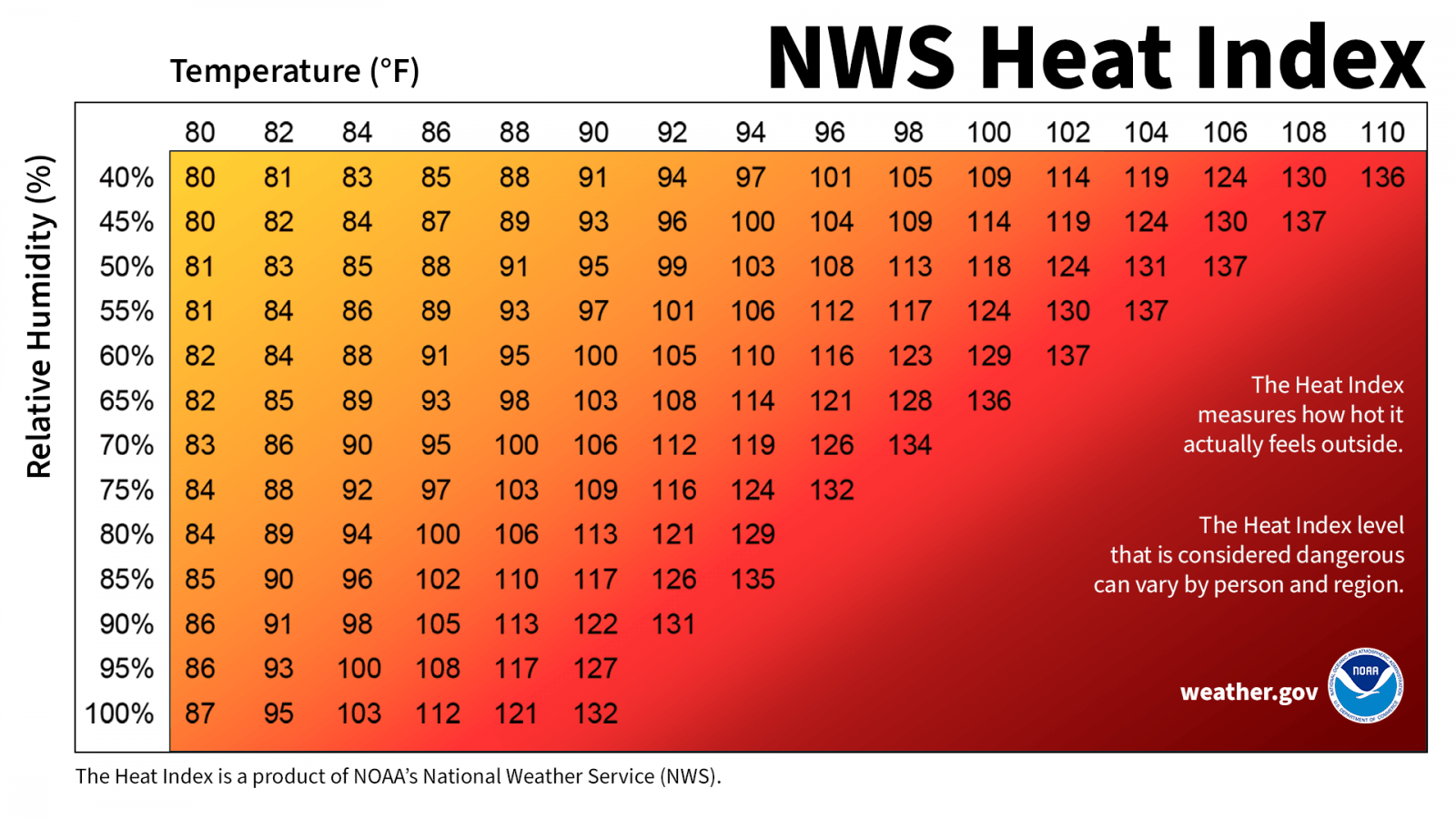
Relative humidity changes when temperature changes, even if the amount of water vapor stays similar. That is one reason a humid morning may show a different heat index relationship after the afternoon warms. Dew point is an excellent measure of atmospheric moisture, but the official heat index formula uses relative humidity with temperature.
What does “feels like” temperature really mean?
“Feels like” is a friendly label rather than one universal scientific quantity. In cold weather, an app may show wind chill. In hot weather, it may show heat index. In moderate conditions, it may simply repeat air temperature or use a proprietary apparent-temperature formula that also considers sun, clouds, or precipitation. Two services can therefore show different feels-like values without either having a faulty thermometer.
For comparisons, identify which index is being shown and use observations from the same source. Official forecasts may use local grids of temperature, wind, and humidity, while your backyard station reports one site. Neither automatically describes a sunny playground, shaded porch, rooftop, and lakeshore equally well.
How local measurements affect the calculation
A small measurement error can move an apparent-temperature calculation. Place a temperature and humidity sensor in a ventilated radiation shield over representative ground, away from walls, pavement, air-conditioner exhaust, and sprinklers. Mount a wind sensor in open exposure if possible, buildings and trees can slow or redirect the wind.
Home stations are useful for following changes at your location, especially when you understand the siting. Our weather station reviews explain sensor and console differences, but buying a station is not necessary to use these safety indexes. The National Weather Service offers an official wind chill and heat index calculator for known inputs.
How to use apparent temperatures safely
In dangerous cold, cover exposed skin, add wind-resistant outer layers, stay dry, shorten time outdoors, and check on people without adequate heat. Shivering, confusion, slurred speech, or loss of coordination can signal hypothermia. Get the person to warmth and seek emergency help. Do not rub severely frostbitten skin or thaw it if refreezing is possible.
In dangerous heat, move activity to cooler hours, take frequent breaks, drink water, use shade or air conditioning, and check on neighbors. Heat stroke is an emergency. Confusion, loss of consciousness, or very abnormal behavior in the heat warrants calling emergency services and beginning rapid cooling. Fans alone may not be adequate during extreme indoor heat.
Always read local watches, warnings, and advisories. They consider more than one number and may reflect duration, nighttime relief, local climatology, and vulnerable populations. The best use of a feels-like temperature is simple: notice rising risk early enough to change the plan.
Frequently asked questions
Can wind chill freeze water?
Wind can make water cool toward the actual air temperature faster, but wind chill cannot cool it below that air temperature. If the air remains above freezing, wind chill alone does not freeze water.
Is heat index the same in direct sunlight?
The answer is no. The standard index assumes shade. Full sun can add substantial heat stress, so exposed conditions may feel hotter than the published value.
Why does my weather station show a different feels-like value?
Its local sensors, siting, update time, or calculation method may differ from the forecast service. Compare the actual temperature, humidity, and wind inputs first.
Which is more accurate, heat index or dew point?
They answer different questions. Dew point describes moisture in the air. Heat index estimates human heat stress using temperature and relative humidity.