
Weather and language
Why Is Autumn Called Fall? The History of Both Season Names
Autumn and fall name the same season. Autumn came through French and Latin, fall grew from the English phrase “fall of the leaf.”
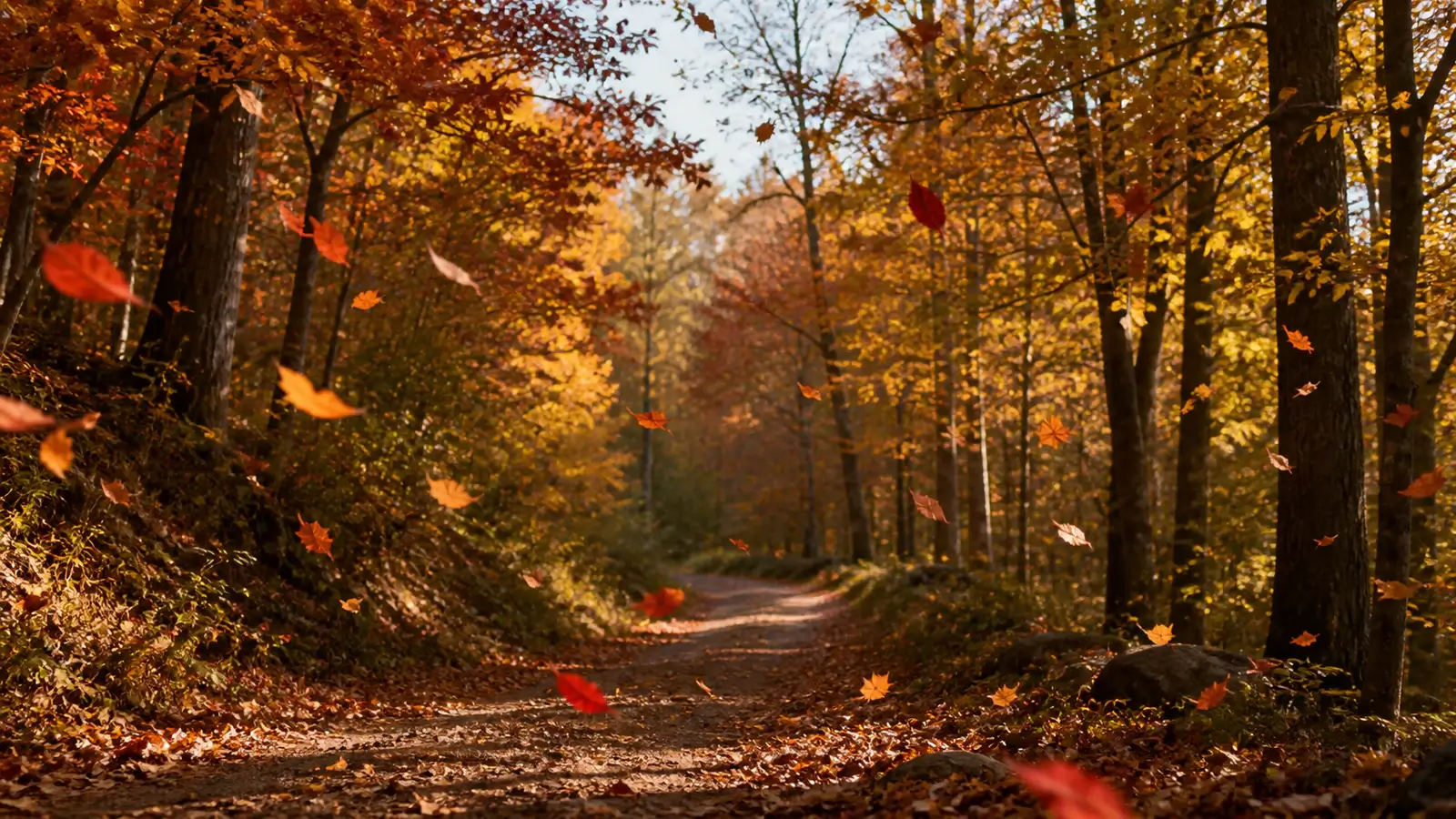
Quick answer
Fall is short for older phrases such as “fall of the leaf,” a vivid reference to leaves dropping from deciduous trees. Autumn entered English through French from the Latin autumnus. Both words became common in English, and both still refer to the season between summer and winter.
Weather gives the season its character: shorter days, cooler air, migrating birds, harvests, first frosts, and changing leaves. Language followed those observations. English speakers did not set out to invent competing scientific seasons, they inherited and reshaped several everyday names over centuries.
Are autumn and fall the same season?
The answer is yes. In modern English, autumn and fall are synonyms for the same season. Autumn is common in British English and widely understood everywhere. Fall is especially common in American English and Canada. Neither word marks a different set of months, a different equinox, or a separate weather pattern.
The tone can differ. Autumn may sound literary or formal to an American ear, while fall sounds conversational. British readers may hear fall as distinctly North American. Those are matters of usage, not meteorology.
Where did the word autumn come from?
English adopted autumn from French, ultimately from Latin autumnus. The deeper origin of the Latin word is uncertain. Forms of autumn appeared in English centuries ago and gradually became one standard name for the season.
Before autumn and fall dominated, English speakers also used harvest for the season. That made practical sense in an agricultural society: the time of gathering crops defined the period. As harvest increasingly named the activity and its yield, separate seasonal terms helped avoid ambiguity.

Why did people begin calling autumn “fall”?
Fall developed from expressions including “fall of the leaf” and “fall of the year.” English writers were using seasonal forms of the word by the 1500s. The image is immediate: leaves fall, temperatures fall, daylight decreases, and the year turns toward winter.
The frequently paired phrase “spring of the leaf” helps explain the symmetry. Vegetation springs up in one season and falls in another. Modern English kept spring and fall as compact seasonal names, although only fall later became strongly associated with North American usage.
This history is more defensible than claiming one person coined the term or that Americans invented it after independence. Fall was used in England before large-scale English settlement of North America. Language changed on both sides of the Atlantic afterward.
Why do Americans say fall while Britain says autumn?
Both words crossed the Atlantic with English speakers. Over time, fall remained highly productive in North American English while autumn became the dominant general term in Britain. This is an example of regional vocabulary diverging, not one side using a new word and the other preserving the only old word.
Americans still use autumn in phrases such as “autumnal equinox,” “autumn colors,” and formal writing. British speakers understand fall, especially through North American media. Dictionaries typically list both without assigning a meteorological difference.
When does autumn—or fall—begin?
| Definition | Northern Hemisphere | Southern Hemisphere | Why it is used |
|---|---|---|---|
| Meteorological season | September 1 through November 30 | March 1 through May 31 | Whole calendar months simplify climate records and comparisons |
| Astronomical season | September equinox to December solstice | March equinox to June solstice | Based on Earth’s orbit and seasonal solar geometry |
| Phenological season | Varies by place and year | Varies by place and year | Based on biological signs such as leaf color, migration, or harvest |
All three definitions can be useful. Meteorologists group complete months so seasonal averages are straightforward. Astronomical seasons follow equinoxes and solstices. Ecologists, gardeners, and observers may notice fall arriving through changing leaves, first frost, migration, or crop maturity. Local weather rarely flips on one official date.
The autumnal equinox is the instant the Sun crosses Earth's equatorial plane, producing nearly equal day and night worldwide. “Equinox” does not guarantee exactly 12 hours of visible daylight because the Sun is a disk and atmospheric refraction makes it appear above the horizon a little longer.
Why do leaves change color and fall?
As nights lengthen, deciduous trees prepare for winter. Chlorophyll production slows and the green pigment breaks down, revealing yellow and orange carotenoids that were already present. Some trees produce red and purple anthocyanins under conditions influenced by light, sugars, temperature, moisture, species, and leaf health.
A separation layer develops where the leaf stem meets the twig. Eventually the connection weakens and wind or gravity removes the leaf. Dropping leaves helps a tree conserve resources and avoid maintaining broad, delicate tissues through freezing or dry winter conditions.

What weather is typical in fall?
Typical depends on location. Midlatitude fall often brings rapidly changing temperatures as the zone between warm and cold air shifts equatorward. Cold fronts become more noticeable, nights lengthen, and the first frost or snow may arrive. Tropical-cyclone season remains active for part of Northern Hemisphere autumn, while some Mediterranean climates begin a wetter season.
Foliage color is not a simple thermometer. A sequence of sunny days and cool, above-freezing nights can favor vivid color for some species. Drought, early hard freezes, storms, insects, and disease can shorten or dull the display. A windy front may remove peak leaves in hours.
Track the transition in a daily weather journal: note the first colored tree, first frost, first morning below a chosen threshold, and date of major leaf fall. After several years, those records become a personal view of seasonal variability—small-scale evidence of the connection between weather and climate.
Frequently asked questions
Which word came first, autumn or fall?
Autumn entered English earlier, while the seasonal use of fall developed later from phrases such as “fall of the leaf.” Both have been established for centuries.
Is fall only an American word?
It is most common in American and Canadian English today, but it originated in English usage before becoming regionally associated with North America.
Is autumn the same everywhere in September?
The answer is no. September begins meteorological autumn in the Northern Hemisphere and meteorological spring in the Southern Hemisphere. Tropical regions may organize seasons more by rainfall than temperature.
Why was autumn called harvest?
Gathering crops was the defining seasonal activity in agricultural life, so harvest served as both an activity and a season name before autumn and fall became dominant.