Weather safety field guide
Winter Weather Preparedness and Safety
Understand watches, warnings, and advisories, prepare the home and vehicle before the storm, and know what to do if travel becomes unsafe or heat and power fail.
Quick answer A watch means significant winter weather is possible and it is time to prepare. A warning means hazardous winter weather is expected or occurring and you should take action. An advisory means winter conditions may not reach local warning criteria but can still make travel difficult. Follow the exact product from your local National Weather Service office because snow and ice thresholds vary by location.
Winter watch vs. warning vs. advisory
| Alert | Meaning | Your action |
|---|---|---|
| Winter Storm Watch | Conditions are favorable for a significant snow, sleet, ice, or mixed event | Adjust plans, charge devices, and finish supplies |
| Winter Storm Warning | Hazardous winter weather is expected or occurring | Avoid unnecessary travel and follow local instructions |
| Winter Weather Advisory | Snow, ice, sleet, or blowing snow may cause travel difficulty below warning criteria | Allow extra time and be prepared for slick roads |
| Blizzard Warning | Strong wind plus falling or blowing snow creates very low visibility for at least three hours | Do not travel |
Prepare before the storm
Home and communication checklist
- Receive alerts from more than one path, including a NOAA Weather Radio.
- Charge phones and backup batteries.
- Keep flashlights, medications, first aid, food, water, and pet supplies ready.
- Test smoke and carbon-monoxide alarms.
- Use generators only outdoors and away from openings, never in a garage.
- Know how to shut off water if a pipe breaks.
Prepare for a power outage and loss of heat
Ice and heavy snow can damage trees and power lines, while extreme demand can strain local systems. Before the storm, identify which household needs depend on electricity: medical equipment, refrigerated medicine, well pumps, electric heat, garage doors, internet service, and powered mobility devices. Charge backup batteries, fill medically necessary prescriptions, and arrange an alternate heated location for anyone whose health cannot tolerate a prolonged outage.Carbon monoxide is the most important heating hazard to plan around. Test battery-backed carbon-monoxide alarms on every level. Operate portable generators outdoors only, well away from doors, windows, and vents, and direct exhaust away from the building. Never run a generator in a garage, even with the door open. Do not use a gas oven or range to heat the home, and do not operate charcoal grills, camp stoves, or other fuel-burning outdoor equipment indoors.| Problem | Prepare before the storm | Safe response |
|---|---|---|
| Indoor temperature falling | Choose one insulated room and gather layers, blankets, and sleeping bags | Close unused rooms, block drafts safely, and relocate before cold becomes a medical threat |
| Pipes at risk | Locate the main shutoff and insulate exposed plumbing | Follow local guidance for faucets and shut off water if a pipe breaks |
| Refrigerated medicine | Ask the pharmacist about temperature limits and backup storage | Use the approved plan. Do not guess whether compromised medicine is safe |
| Communication outage | Write down contacts and receive alerts by radio as well as phone | Conserve batteries and use texts when networks are congested |
Decide whether to travel
Start with your local forecast and state or local 511 service. Consider timing, road-treatment status, expected visibility, temperatures near freezing, and whether conditions worsen before the return trip. If officials advise against travel, a capable vehicle is not a reason to ignore the guidance.Before a necessary trip, clear all snow and ice from the vehicle, fill washer fluid rated for the temperature, check tires, lights, wipers, and fuel, share the route and expected arrival, and carry a winter car emergency kit.If you become stranded in winter
- Stay with the vehicle. It provides shelter and is easier for rescuers to find.
- Call for help and share location. Conserve the phone after contact.
- Keep the exhaust pipe clear. Snow blockage can allow carbon monoxide to enter.
- Run the engine intermittently. NWS guidance uses about ten minutes each hour, with a window opened slightly for fresh air.
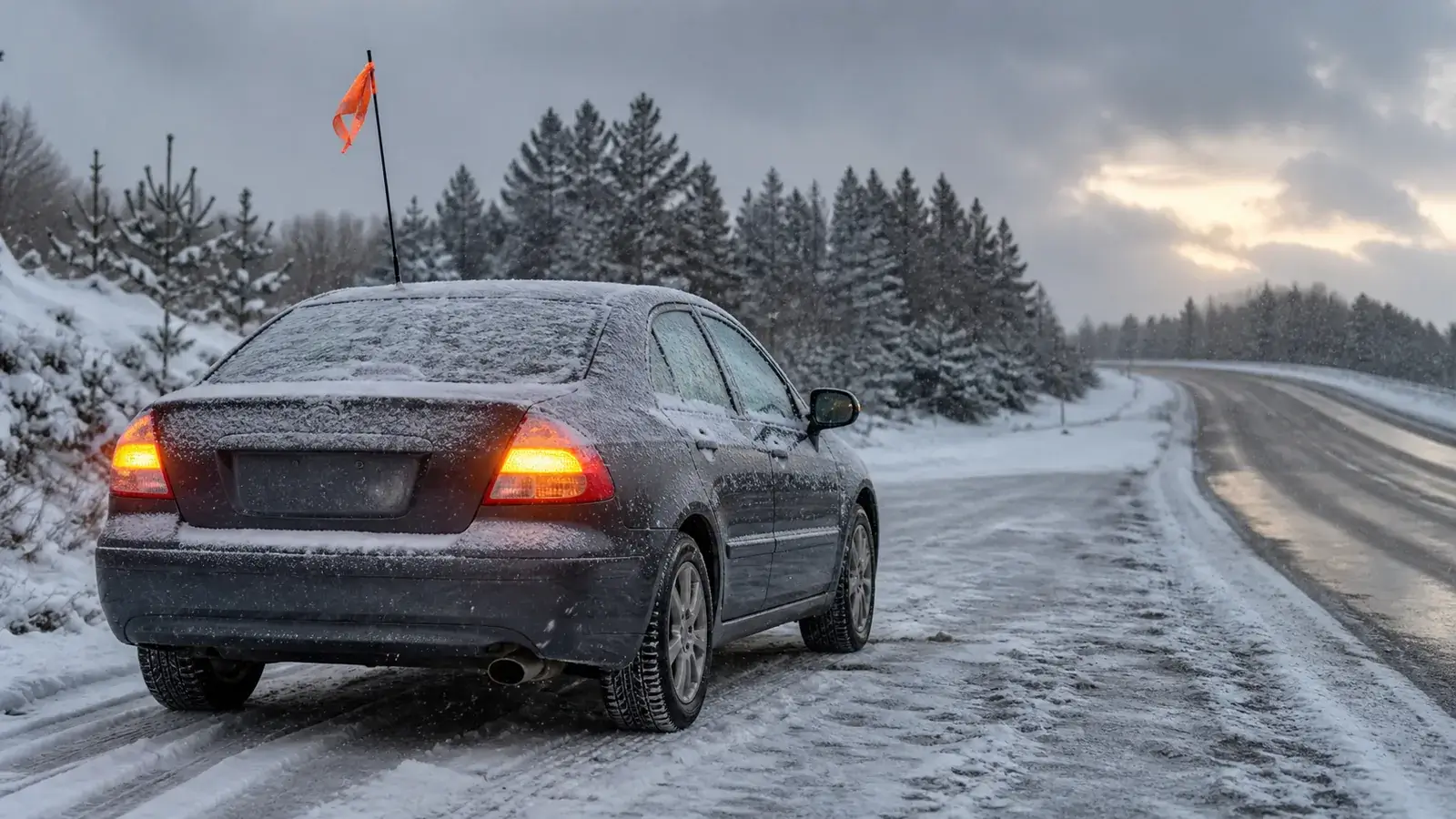
- Make the vehicle visible. Use hazard markers and an interior light when appropriate.
- Move enough to maintain circulation. Avoid exhausting effort and sweating.