
Weather Station Reviews and Comparisons
Find a weather station that fits your property, priorities, and preferred way of viewing data. Our reviews focus on sensor design, siting, accuracy, update speed, connectivity, maintenance, and long-term ownership—not feature counts alone.
Use a brand guide to understand one product family, a head-to-head comparison when your shortlist has two models, or an individual review when you already know the station. No single design is best for every yard: the most useful station is one you can site, maintain, and read in the way you actually need.
Choose your path
Understand a brand
See how the current models differ, which systems are expandable, and where old bundle names can mislead.
Narrow a shortlist
Use direct comparisons to focus on the tradeoff that changes the decision—not merely which model has more features.
Check one model
Read the complete review for exact bundle identity, sensor architecture, limitations, ownership requirements, and buyer fit.
Browse weather stations by brand
Brand guides explain the product families before you choose a model. They are especially useful when displays, apps, replacement parts, and optional sensors differ within the same ecosystem.
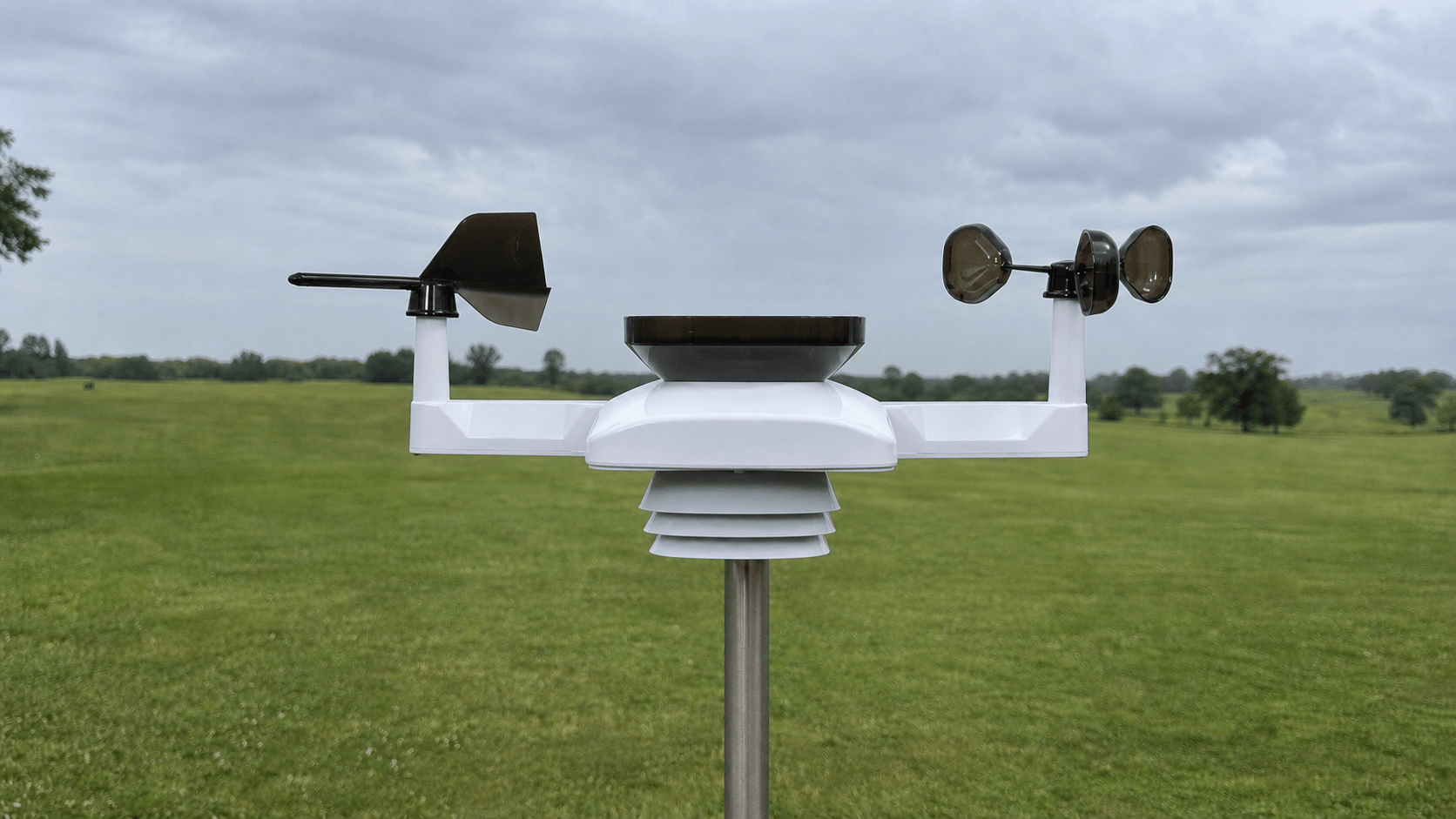 Optimus
AcuRite weather stations
Compare Notos, Iris, Atlas, and Optimus—from simple local displays to aspirated sensors and built-in or optional lightning detection.
Browse AcuRite →
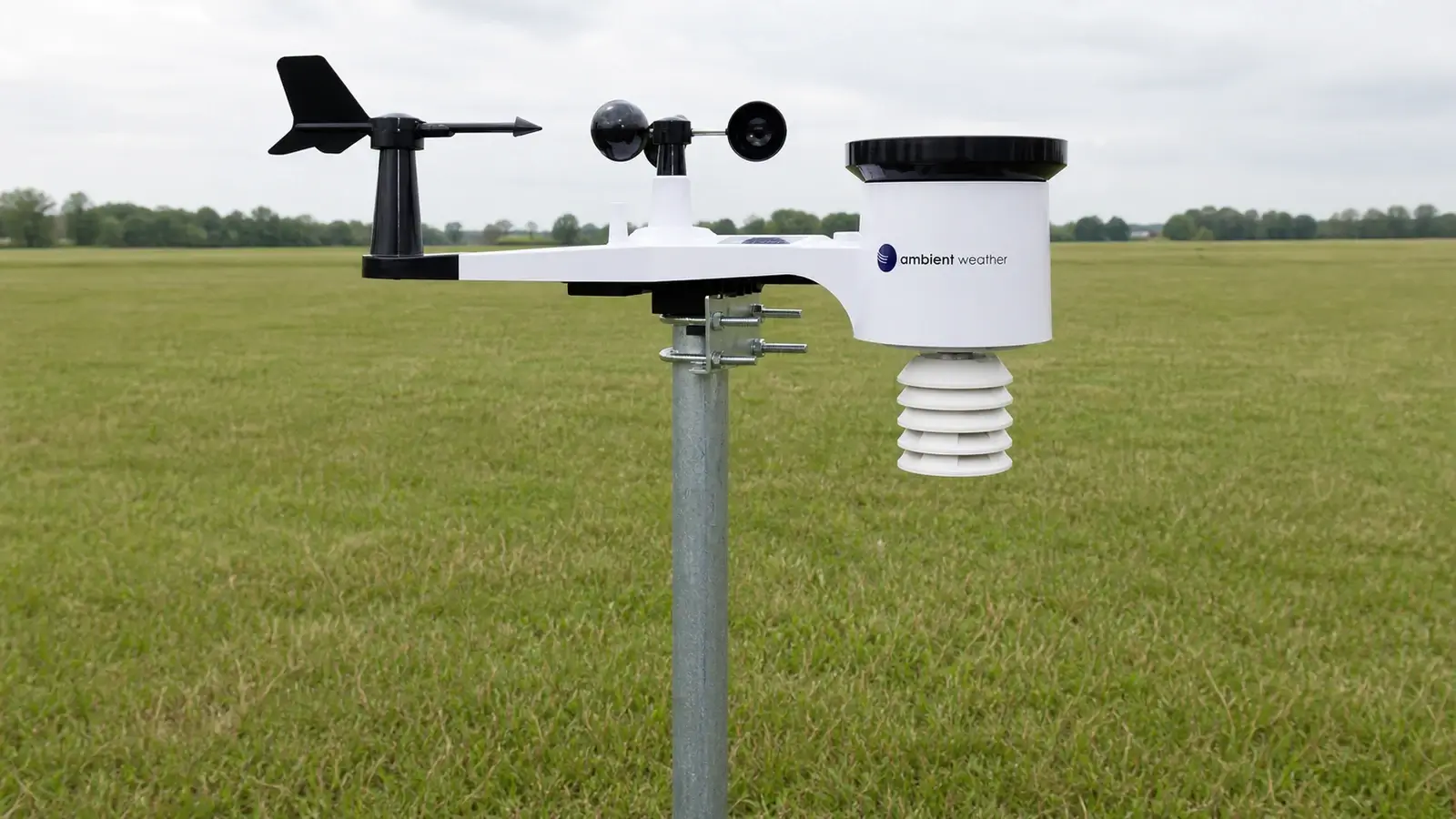 WS-2000
Ambient Weather weather stations
Compare the WS-1965, WS-2902, WS-2000, WS-4000, and WS-5000 across console quality, sensor design, AWN connectivity, and expansion.
Browse Ambient Weather →
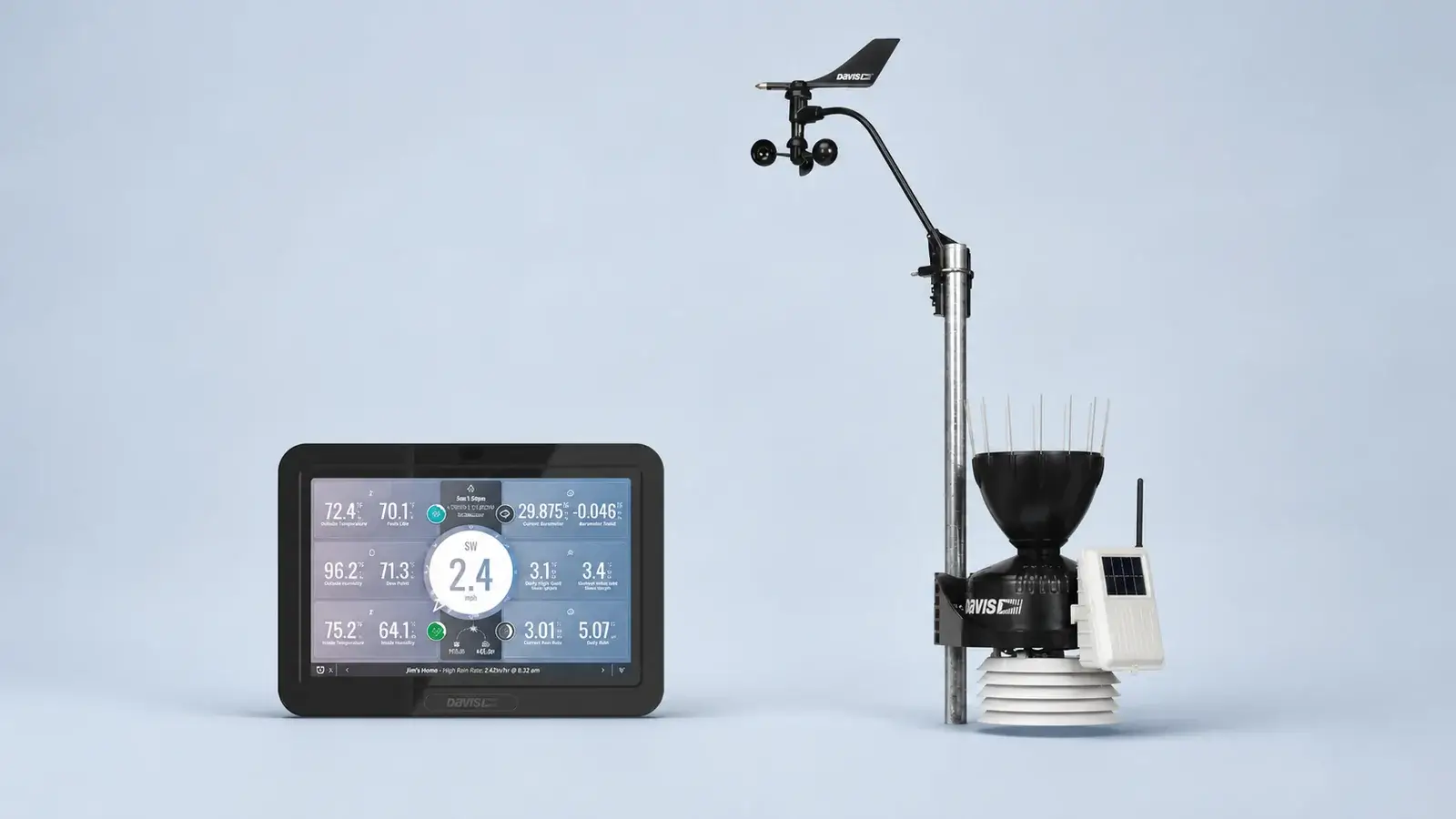 Vantage Pro2
Davis Instruments weather stations
Compare Vantage Vue and Vantage Pro2 for radio range, update speed, build, long-term serviceability, and independent wind placement.
Browse Davis Instruments →
Go directly to our WeatherFlow Tempest review, La Crosse V42-PRO-INT review, or Sainlogic SA9 family review. Or browse every current weather station review.
Compare similar weather stations
A useful comparison should answer one real choice. These pages focus on differences in sensor placement, rain and wind design, console quality, connectivity, and long-term ownership.
Ambient WS-2000 vs. WS-2902
Decide whether the WS-2000’s TFT console, separate indoor sensor, and broader expansion justify paying more than the value-focused WS-2902.
Compare models →
Head-to-head comparisonAmbient WS-2000 vs. WS-5000
Compare an integrated conventional array with the WS-5000’s faster ultrasonic wind sensor and separately placed rain gauge.
Compare models →
Head-to-head comparisonAmbient WS-5000 vs. WS-4000
Choose between flexible split sensors with tipping-bucket rain and a compact all-in-one array using ultrasonic wind and haptic rain.
Compare models →
Head-to-head comparisonDavis Vantage Vue vs. Vantage Pro2
Choose the Vue for compact simplicity or Pro2 when separate wind placement and a deeper field-system ecosystem solve a real need.
Compare models →
What makes one station a better fit?
The best specification sheet does not guarantee the best observations. Start with the measurements you need, then make sure your property, mounting options, display habits, and maintenance tolerance support the design.
Sensor placement
Wind benefits from height and open exposure. Temperature, humidity, and rain usually need a lower, representative, serviceable location. Integrated arrays require a documented compromise.
How you view data
A premium console matters when the household checks it throughout the day. An app-first system makes more sense when remote access, integrations, and alerts are central.
Ownership after setup
Batteries, cleaning, calibration, replacement parts, software support, and safe access matter for years after the initial installation.
Current weather station reviews
These are current purchase reviews or current family guides. The cards state the best reader fit and the limitation most likely to change the decision.
Ambient Weather
Ambient Weather WS-2000
Best all-around balance when the local console and expansion ecosystem will be used
Read review →
Current reviewAmbient Weather WS-2902
Best value for complete core backyard observations with Wi-Fi
Read review →
Current reviewAmbient Weather WS-5000
Premium home monitoring where separate wind and rain placement will be used
Read review →
Current reviewAmbient Weather WS-4000
Compact premium hardware with ultrasonic wind, haptic rain, and a strong local console
Read review →
Current reviewAmbient Weather WS-1965
Lowest-cost entry to Ambient Weather Network with room to add targeted sensors
Read review →
AcuRite
AcuRite Atlas
Aspirated all-in-one sensing with UV/light and optional lightning at a middle-ground price
Read review →
familyAcuRite Optimus
Compact current AcuRite hardware with built-in lightning and the NOW platform
Read review →
family plus legacy bundle referenceAcuRite Iris
Familiar local-display weather station with temperature, humidity, wind, and rain
Read review →
familyAcuRite Notos
Simple local temperature, humidity, and wind-speed monitoring at the lowest cost
Read review →
Davis Instruments
Davis Instruments Vantage Pro2 6252
Serious long-term monitoring where independent wind placement and serviceability matter
Read review →
Current reviewDavis Instruments Vantage Vue 6242
Durable compact premium station with fast updates and long radio range
Read review →
Other current stations
WeatherFlow Tempest
App-first households, smart-home integrations, irrigation, and minimal visual clutter
Read review →
Current reviewLa Crosse Technology V42-PRO-INT
Display-first home monitoring with separate temperature/humidity placement
Read review →
family; exact marketplace bundle must be verifiedSainlogic SA9 family
Feature-heavy large-console package at a controlled initial price
Read review →
How we evaluate weather stations
Our evidence-checked reviews compare the current manufacturer product information, manuals, support documentation, bundle identities, and relevant retailer listings. We evaluate the ownership experience as well as the advertised features.
Measurements and cadence
What the station measures directly, what it calculates, the published tolerances, and how often each sensor reports.
Siting and architecture
Whether wind, rain, and temperature can be placed separately and what compromises an integrated array creates.
Console and software
Local display quality, app and web access, Wi-Fi requirements, cloud dependence, exports, and integrations.
Expansion and compatibility
Optional sensors, channel limits, model-specific compatibility, repeaters, networks, and replacement components.
Installation and maintenance
Mounting hardware, power, batteries, service access, cleaning, leveling, calibration, and weather exposure.
Reader fit and value
Who benefits from the design, who should choose something else, and whether the premium solves a real problem.
Product availability, software, subscriptions, bundles, and prices can change. Recheck the exact manufacturer model and seller listing before ordering.
Legacy equipment and owner support
A retired model can still deserve a useful page when owners need parts, setup information, troubleshooting, or a sensible upgrade path. Legacy coverage is separated from current purchase reviews so old inventory is not mistaken for a current recommendation.
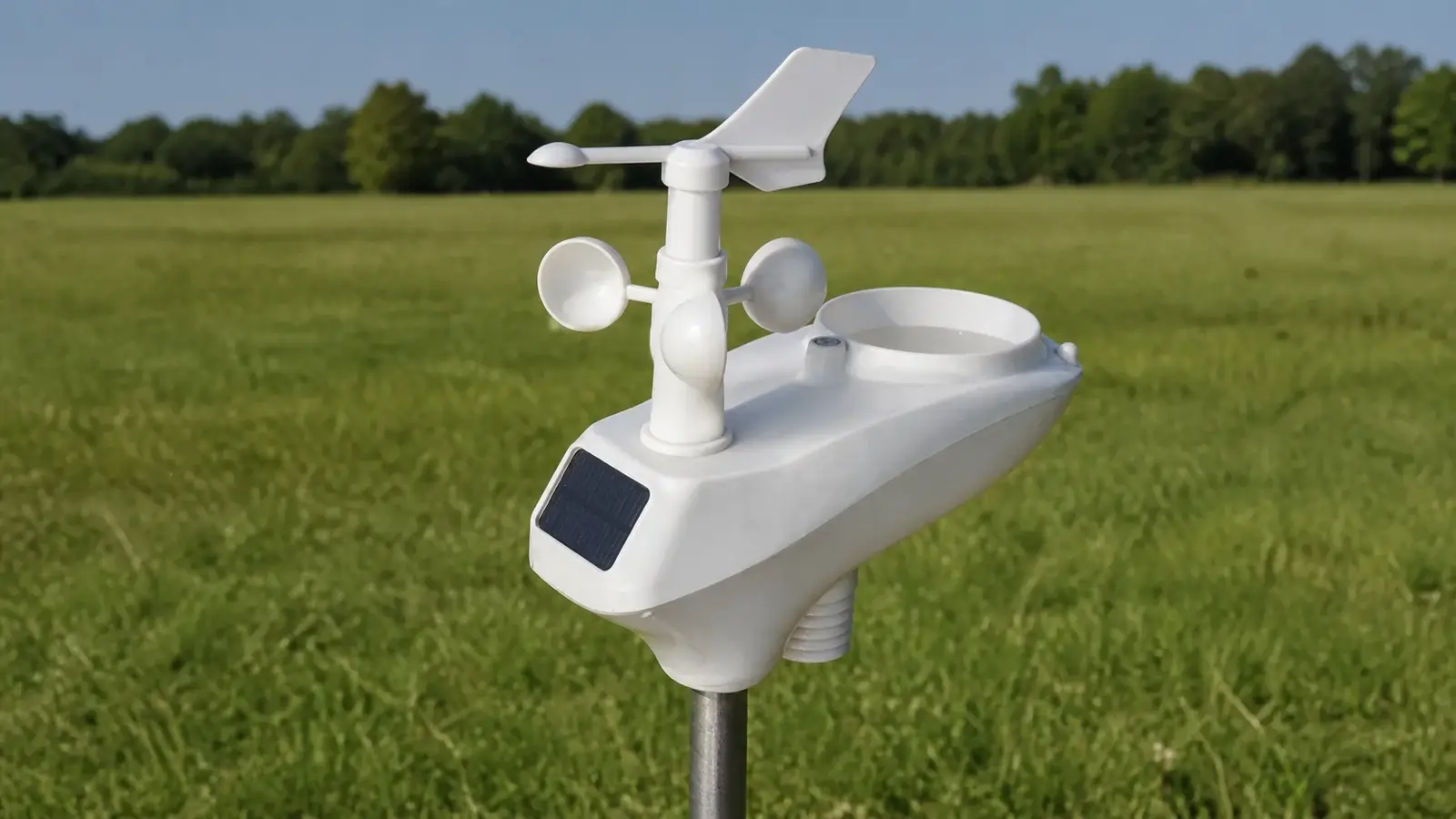
Ambient Weather WS-1002, WS-1201-IP, and WS-1401-IP
Identify the older Observer hardware, diagnose common failures, preserve calibration where practical, and compare current upgrade paths.