
Community preparedness
What Is StormReady? How Communities Become Weather-Ready
StormReady is a National Weather Service recognition program for communities that strengthen warning reception, local monitoring, communication, planning, and public preparedness.

Quick answer
StormReady is a voluntary National Weather Service recognition program for U.S. communities and other eligible entities that meet guidelines for receiving warnings, monitoring local weather, disseminating alerts, educating the public, and maintaining a formal hazardous-weather plan. Recognition shows that a preparedness system is in place. It does not make a place storm-proof.
A warning succeeds only if people receive it, understand it, and know what to do. StormReady focuses on that full chain. Radar and forecasting remain crucial, but local communications, trained people, backup methods, exercises, and public education determine whether information becomes action.
What is the StormReady program?
The National Weather Service created StormReady to help communities develop the communication and safety skills needed before, during, and after hazardous weather. Counties, cities, towns, tribal nations, universities, commercial sites, military installations, and other entities may be eligible under program categories and local guidelines.
Local National Weather Service offices work with applicants through StormReady advisory boards. Population helps determine some numerical requirements because a large county and a small town need different operational capacity. The current official application and guidelines should always control. Summaries can become outdated as the program evolves.

How does StormReady fit Weather-Ready Nation?
Weather-Ready Nation is NOAA's broader effort to increase resilience to extreme weather, water, and climate events. It includes better forecasts and decision support, but also partnerships that help people act. StormReady is one practical community program within that larger goal.
The distinction is useful. Weather-Ready Nation is a national vision and partnership effort. StormReady is a defined recognition process. An organization can support a weather-ready culture without being a recognized community, and recognition is one milestone rather than the end of preparedness work.
Six core StormReady capabilities
- A 24-hour warning point and emergency operations capability. The community needs a reliable place and process for receiving and acting on urgent information at any hour.
- More than one way to receive warnings and forecasts. Redundancy may include NOAA Weather Radio, emergency networks, internet services, satellite systems, or other approved methods.
- More than one way to alert the public. Sirens, wireless alerts, local media, public-address systems, notification services, and partner networks reach different people. No single method reaches everyone.
- Local weather monitoring. Radar, observing networks, reports, and trained people help officials understand conditions and relay local information.
- Preparedness for the public. Talks, material, outreach, and exercises help residents know hazards, shelter locations, and warning meanings before the emergency.
- A formal hazardous-weather plan. The written plan covers activation, warning dissemination, spotter procedures, communication, exercises, and coordination with the NWS.
Exact requirements depend on the applicant type and population. A strong application documents that capabilities exist and that people know how to use them. Buying equipment without staffing, procedures, maintenance, and training does not create a complete warning system.
How does a community become StormReady?
| Stage | What happens |
|---|---|
| Contact | Emergency management contacts the local National Weather Service warning coordination meteorologist |
| Assess | The applicant reviews current warning points, communication paths, observing capability, plans, and training |
| Improve | Gaps are addressed through procedures, equipment, partnerships, outreach, or exercises |
| Apply and verify | The advisory board reviews documentation and normally conducts a site visit |
| Recognize and renew | Qualifying entities receive time-limited recognition and later demonstrate continued readiness |
The best first step is a conversation with the local NWS office, not purchasing a particular siren or software package. The warning coordination meteorologist can explain the correct category, current standards, and local hazards. Partnerships with broadcasters, schools, hospitals, amateur-radio groups, utilities, and volunteer organizations may strengthen the plan.
What StormReady recognition does—and does not—mean
Recognition means the entity met program guidelines when approved and agreed to maintain its program. It signals organized preparedness, multiple communication methods, planning, training, and collaboration with the NWS. It can also provide a framework for budget requests and recurring exercises.
It does not guarantee that warnings will never fail, that every resident will receive an alert, or that damage and injuries will not occur. Power, cellular service, sirens, internet connections, and staffing can fail. Some hazards develop faster than warning systems can reach everyone. Personal preparedness remains essential.
A siren is particularly easy to misunderstand. Outdoor warning sirens are generally designed to alert people outdoors, and policies differ among communities. They may not be audible inside well-insulated buildings or during wind and rain. Find out what your local sirens mean, and keep indoor alert methods.
How residents can help build a weather-ready community
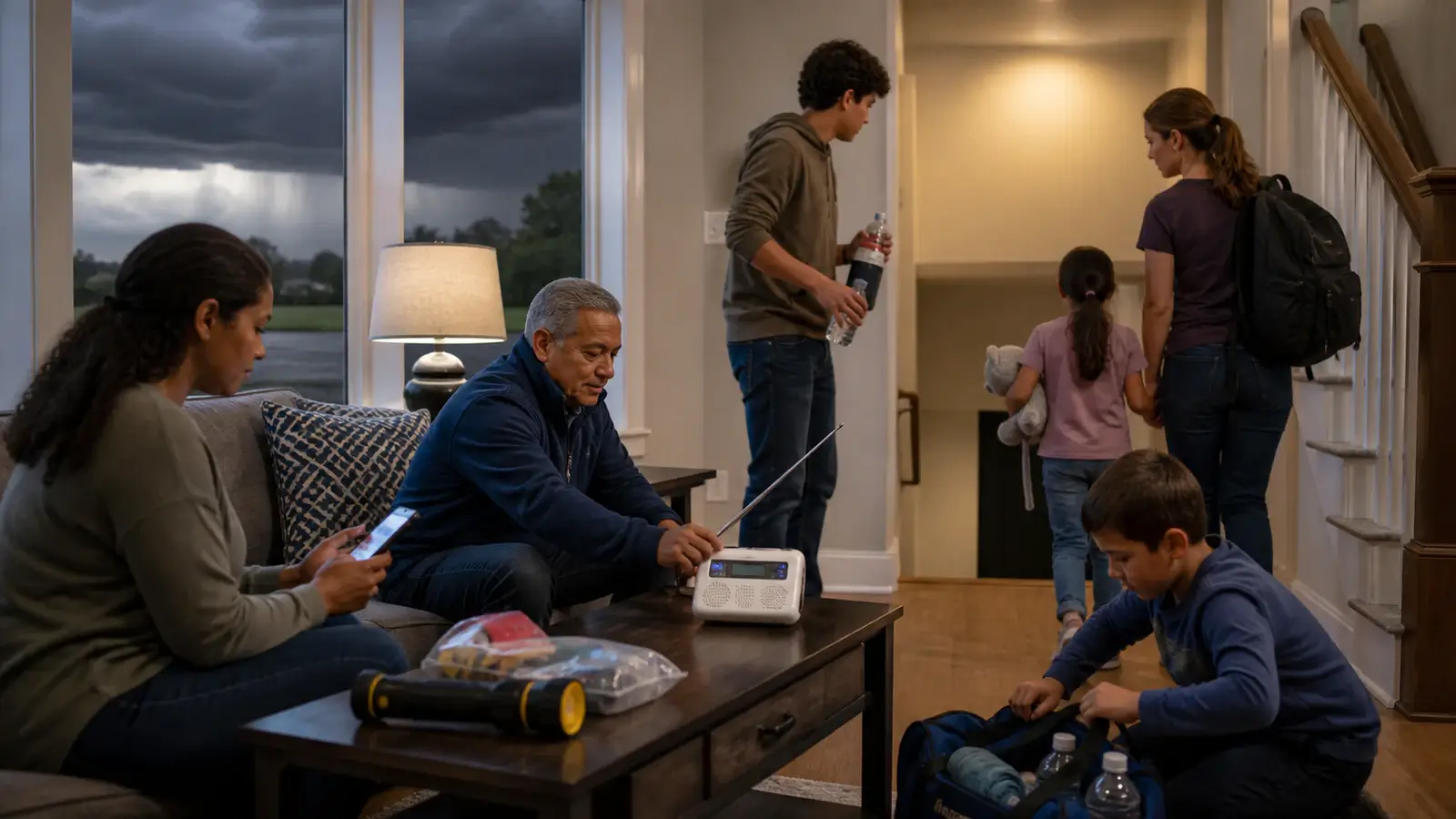
- Enable emergency alerts on phones and keep NOAA Weather Radio as a dependable backup.
- Know whether your home, workplace, and school are in flood, storm-surge, wildfire, or other hazard zones.
- Choose the safest available shelter for tornadoes and high wind before a warning.
- Practice a household communication plan and include medication, mobility, pets, and power needs.
- Ask local officials how warnings are sent, what sirens mean, and where official updates appear.
- Share accessible, translated, official information rather than screenshots without a source or timestamp.
Preparedness should include people who are Deaf or hard of hearing, blind or low-vision, speak different languages, lack smartphones, work outdoors, or need transportation assistance. Redundant systems are not wasteful duplication. They are how a community reaches people in different circumstances.
StormReady universities, businesses, and other sites
Large venues and campuses face special communication challenges. Thousands of visitors may not know the buildings, local hazards, or alert systems. A plan needs trained staff, clear shelter instructions, accessible alerts, accountability, and ways to pause events before conditions become dangerous.
Recognition categories and criteria differ, so an organization should not market itself as a StormReady community unless the official status matches. The National Weather Service maintains listings and can confirm current recognition and expiration dates.
The role of weather observers and spotters
Local observations can confirm hail size, wind damage, flooding, visibility, snowfall, and other conditions that radar cannot fully resolve. StormReady plans may include trained spotter activation and reporting. The SKYWARN training guide explains how volunteers can learn local reporting criteria.
Spotting must be safe, timely, and specific. Include location, time, source, and a direct description. Distinguish measured from estimated values. Never enter floodwater, stand outside for a better view of lightning, or drive into a storm to create a report. A weather-ready observer values personal safety as part of observation quality.
Frequently asked questions
Is StormReady certification permanent?
The answer is no. Recognition is time-limited and must be renewed under current program procedures, helping ensure that plans, contacts, training, and equipment remain active.
Does every StormReady community have tornado sirens?
The answer is no. Public warning requirements can be met through approved combinations of methods, and local hazards and infrastructure differ. Sirens are only one possible tool.
Can a university or business become StormReady?
Eligible universities, commercial sites, military installations, tribal entities, and other organizations can apply under appropriate program categories. The local NWS office explains current criteria.
How can I check whether my community is recognized?
Use the official StormReady site or contact your local National Weather Service office and emergency management agency for current status.