
Ambient Weather WS-4000 Review: Is Haptic Rain Worth It?
The WS-4000 combines ultrasonic wind and piezoelectric rain sensing in a compact array, then pairs it with Ambient Weather’s premium TFT console. Its low-mechanical-maintenance design is appealing, but the rain sensor’s calibration demands are the decision point.
Affiliate disclosure: WXObservation may earn a commission from qualifying Amazon purchases, at no additional cost to you. Availability, seller, bundle contents, and prices can change, confirm the current listing before ordering.

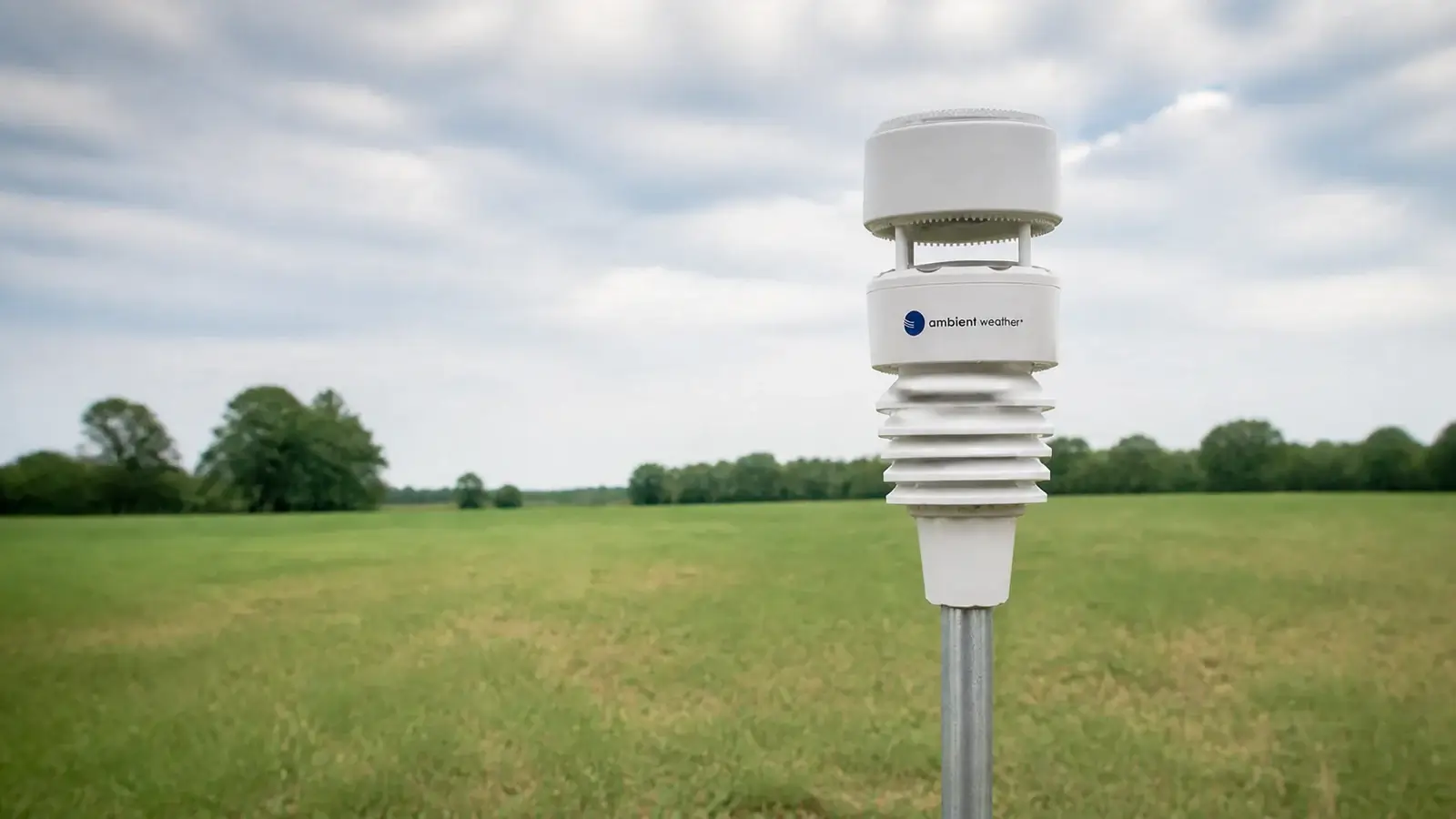
Ambient Weather WS-4000
Choose the WS-4000 when you value a small outdoor array with ultrasonic wind, haptic rain, fast updates, a useful local display, and access to Ambient Weather’s sensor ecosystem.
Confirm the listing is the standard WS-4000 bundle and includes the array, WH32B indoor sensor, TFT console, and power adapter. A pole or mounting system is not included.
WS-4000 specifications at a glance
| Decision point | What the current system provides |
|---|---|
| Outdoor measurements | Ultrasonic wind speed and direction, haptic or piezoelectric rain, outdoor temperature and humidity, UV, solar radiation, and light in one compact array. |
| Indoor measurements | Separate WH32B indoor temperature, humidity, and barometric-pressure sensor. |
| Update cadence | The manual lists a 4.9-second outdoor-sensor update rate. The transmitter status light has a different blink interval and should not be used as the data-update specification. |
| Sensor-to-console radio | 915 MHz, rated to 1,000 feet in open air and about 300 feet under typical conditions. |
| Home Wi-Fi | 2.4 GHz Wi-Fi from the TFT console for Ambient Weather Network and supported sharing or integration features. |
| Outdoor power | Solar primary power with two AA backup batteries, the backup batteries are not included in the standard package. |
| Mounting | Fits a 1-inch vertical pole. The pole or mounting system is sold separately. Ambient Weather offers model-specific pole and tripod options. |
| Expansion | Supports selected Ambient Weather temperature, probe, refrigerator/freezer, leak, soil, leaf-wetness, particulate, indoor air-quality, and other sensors. |
Radio ranges are manufacturer best-case ratings, not promises for every property. Walls, metal siding, electronics, terrain, and console placement can reduce reception substantially.
The WS-4000’s real value is packaging, not automatic accuracy
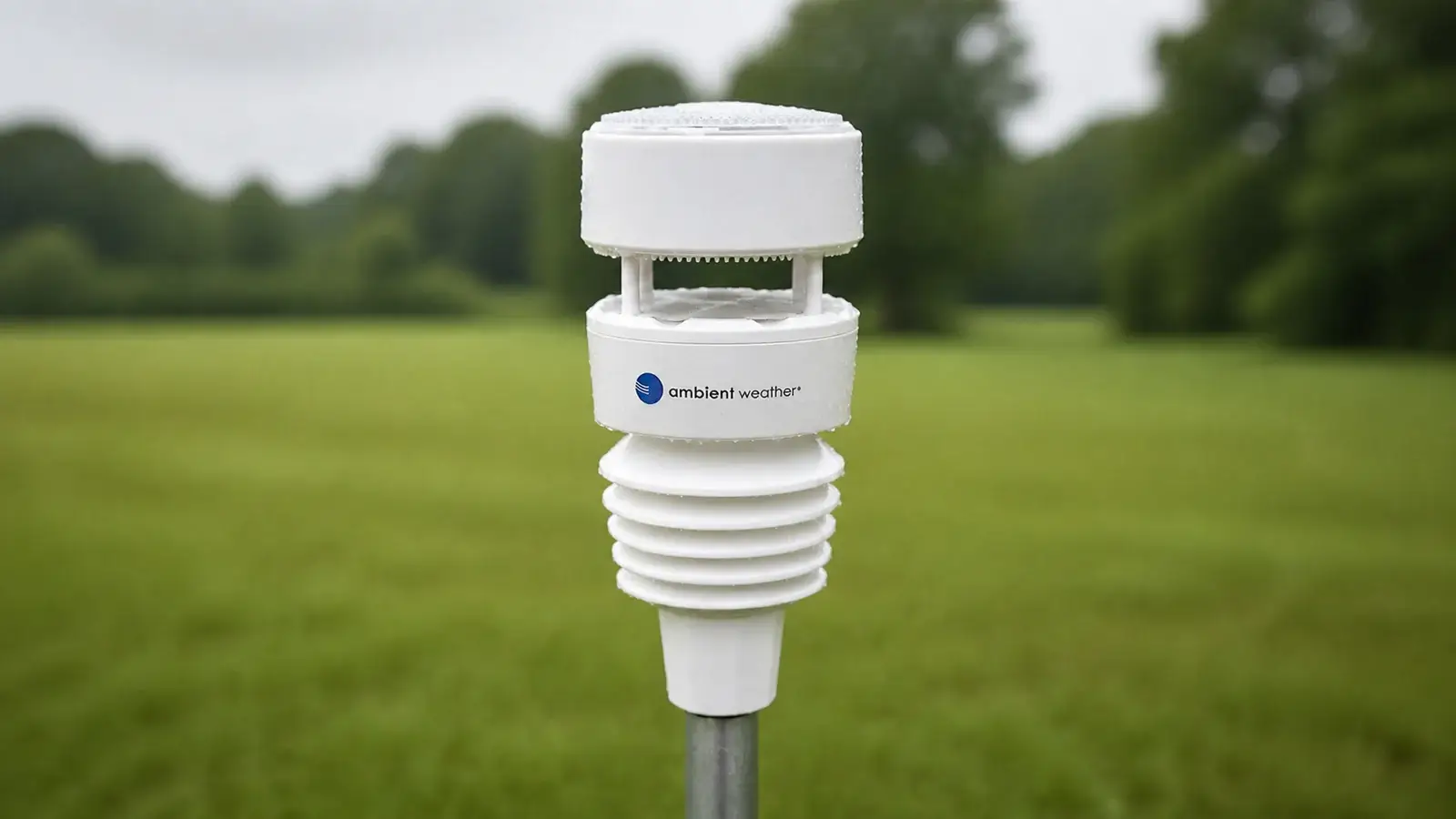
The WS-4000 compresses the main outdoor instruments into a relatively small cylinder. There are no spinning wind cups, mechanical vane, or tipping bucket. That can mean fewer bearings, pivots, and exposed mechanical pieces to wear, bind, or collect debris. It also gives the station a cleaner profile than a conventional multi-arm sensor suite.
That packaging is convenient, but it locks wind, temperature, humidity, and rain into one location. Wind benefits from height and open exposure. Temperature and humidity benefit from natural ventilation and distance from pavement, walls, rooftops, exhausts, and reflected heat. Rain measurement needs a rigid, low-vibration installation in a representative exposure. A single pole can rarely be ideal for every measurement.
Haptic rain is the main decision
The WS-4000 senses rainfall by measuring impacts on a piezoelectric surface rather than counting tips from a mechanical bucket. In principle, this removes a moving component and the funnel that can collect leaves or insects. In practice, the sensor has to distinguish rain impacts from vibration, wind effects, and the physical behavior of different drop sizes and intensities.
Ambient Weather’s manual provides separate calibration factors across several rain-rate bands. That is important: one blanket adjustment may not correct light, moderate, and heavy rain equally. The recommended process is to compare the WS-4000 against a trustworthy gauge over meaningful events, then adjust the relevant range rather than reacting to a single storm or a nearby app total.
A rigid mount is essential. Pole sway, roof vibration, handling, and nearby impacts can create or distort the signal the haptic sensor is trying to interpret. Relocating the array changes its vibration environment, so calibration should be checked again after a move, mount change, or unusually intense event. The manufacturer also recommends periodic rechecking, a six-month review is a sensible maximum interval when rainfall matters.
Reference it locally
Use a level manual gauge or another trusted local reference in comparable exposure. Airport or neighborhood totals can differ because the rain itself differs.
Compare enough rain
Do not calibrate from a few drops or one brief shower. Accumulate representative events and note whether the error changes with rain intensity.
Change one factor at a time
Record the original settings, make measured adjustments by rate band, and evaluate the next events before changing the calibration again.
If the console shows no rain, Ambient Weather support specifically instructs owners to verify that Rainfall Data Priority is set to the haptic or piezoelectric sensor option. That is a configuration check, not a reason to recalibrate a working sensor immediately.
Our verdict on haptic rain: it is a reasonable convenience-first design for owners who accept validation and tuning. It is not the best fit for someone who wants rainfall to be a set-it-and-forget-it measurement or who cannot provide a rigid, low-vibration mount.
Accuracy still depends on exposure and calibration
The current manual rates outdoor temperature to plus or minus 0.6 degrees F, humidity to plus or minus 3.5%, rainfall to plus or minus 5%, and wind speed to plus or minus 1 mph below 22 mph or plus or minus 5% at and above 22 mph. It rates wind direction to plus or minus 10 degrees below 5 mph and plus or minus 7 degrees at or above 5 mph. These are instrument specifications under defined conditions, not a promise that every backyard installation will meet them.
Wind
Put the array as high and open as practical, away from roof edges, trees, fences, and walls that create turbulence. Confirm north alignment and use a pole that does not twist or sway.
Temperature and humidity
Avoid pavement, dark roofs, walls, exhausts, and irrigation. The radiation shield needs airflow, software calibration cannot fully repair repeatable solar or structural heating.
Rain
Use a rigid installation with open sky exposure, then validate totals against a suitable local gauge. Mount vibration and different rain-rate behavior matter more here than with a traditional bucket.
Pressure
The WH32B measures pressure indoors. Let it stabilize and calibrate relative pressure cautiously against a trustworthy nearby reference with a known elevation correction.
The honest goal in a residential yard is a documented and repeatable compromise. Ultrasonic and haptic sensors change how measurements are made. They do not make poor exposure disappear.
Ultrasonic wind: fewer moving parts, not zero maintenance
The WS-4000 derives wind speed and direction without spinning cups or a vane. That removes bearings and mechanical pieces that can wear or respond sluggishly. The roughly five-second outdoor update rate also makes changing wind feel much more immediate than slower consumer arrays.
The sonic path still has to stay clear. Inspect the openings and nearby surfaces for insects, webs, dust, bird debris, and ice. Clean with the method in the current manual rather than pushing tools into the sensor. The solar panel, UV and light surfaces, radiation shield, and housing also need periodic inspection.
Freezing rain and wet snow can affect an exposed ultrasonic sensor. Do not interpret “no moving parts” as “weatherproof against every icing event.” Buyers in cold climates should prioritize safe access before mounting the array where it cannot be inspected.
The TFT console is a strong reason to buy
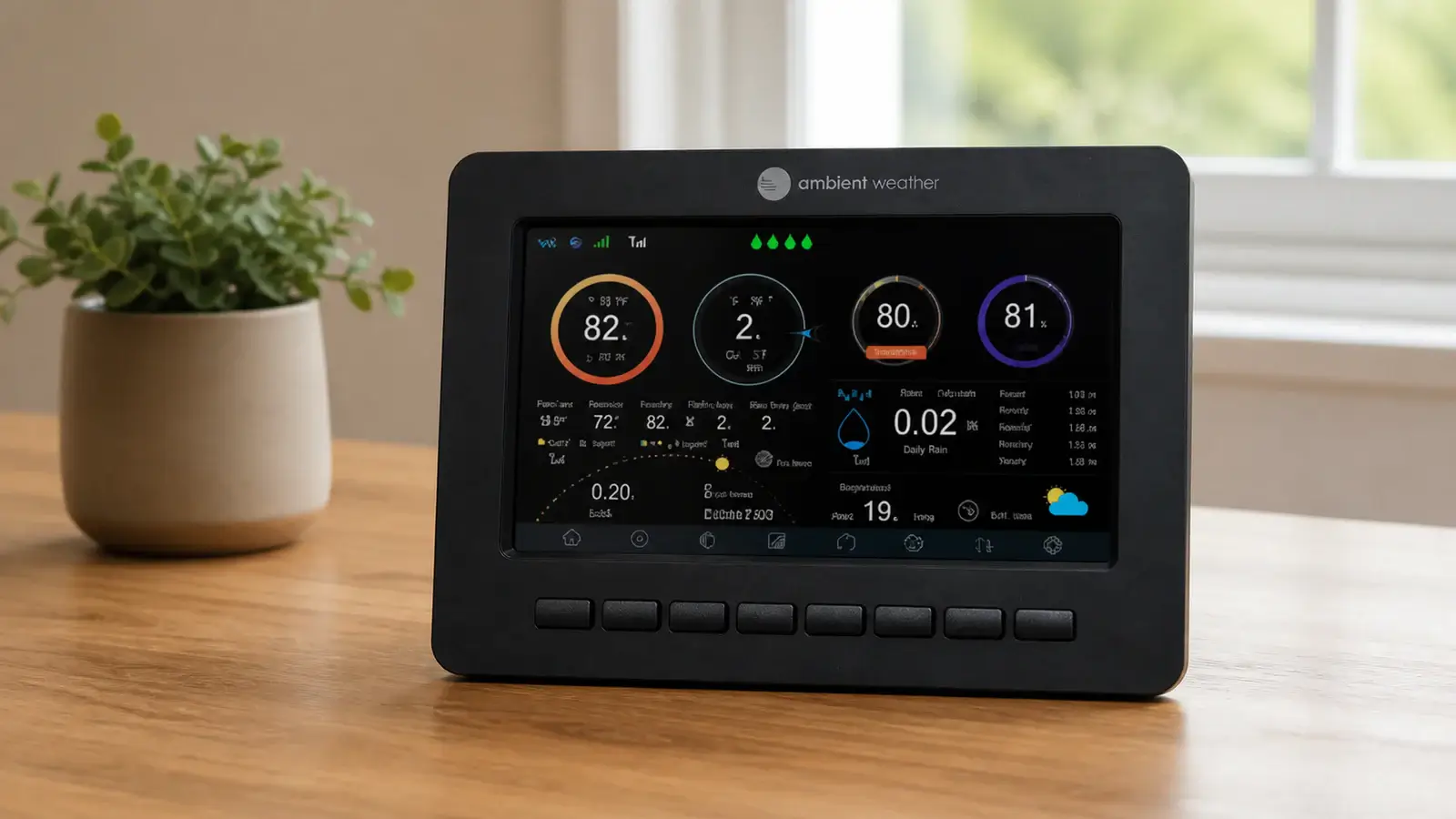
The included color TFT console is built for people who want a useful local dashboard, not only an app. It displays current conditions, minimums and maximums, trend graphics, alarms, calibration controls, and historical data. It can archive records to an optional microSD card, and recent console revisions support firmware workflows through the console or Wi-Fi.
The separate WH32B indoor sensor is a practical advantage. Indoor temperature, humidity, and pressure are not tied to the best viewing location for the screen. The sensor can stay away from a sunny wall, television, kitchen appliance, or other heat source while the display remains convenient.
Connectivity: useful locally and remotely
The console can publish to Ambient Weather Network (AWN) for remote dashboards, alerts, sharing, and supported integrations. Core station use does not require an AWN+ subscription. Ambient Weather also offers optional paid AWN+ features, so distinguish subscription extras from the standard dashboard before evaluating ongoing cost.
Cloud access adds convenience, but it depends on the console, router, internet connection, Ambient Weather’s service, and any third party in the chain. Integrations can change. Weather automations should fail safely rather than assuming every upload or alert will arrive.
A capable expansion platform, with model-specific compatibility
The WS-4000 works with selected Ambient Weather add-on sensors for extra temperature and humidity locations, probes, refrigerators and freezers, leaks, soil moisture, leaf wetness, particulate matter, and indoor air quality. This can turn the console and AWN account into a broader property-monitoring system.
Climate zones
Extra temperature-humidity or probe sensors can monitor a greenhouse, basement, attic, workshop, pool, or detached building when the radio path is reliable.
Water and plants
Leak, soil-moisture, and leaf-wetness sensors can add useful context, but they also add batteries, placement decisions, and maintenance.
Air and hazards
Particulate and air-quality accessories add local observations. They are not substitutes for certified life-safety devices, official warnings, or regulatory monitoring.
Compatibility and channel limits are model-specific. Similar-looking sensors are not automatically interchangeable, and several accessories can share channel groups. Check the exact model number against Ambient Weather’s current compatibility page before ordering.
Installation and ownership
- Bench-test the array, WH32B, and console together before permanent mounting.
- Choose a rigid, open, serviceable location before buying the pole or tripod.
- Use a compatible 1-inch vertical pole and follow the current orientation and leveling instructions.
- Install two fresh AA backup batteries in the outdoor array and record the installation date.
- Confirm the 915 MHz path to the console and 2.4 GHz Wi-Fi at the intended display location.
- Let the system collect baseline data before adjusting temperature, pressure, wind, or rain calibration.
- Keep the array reachable for cleaning, battery service, reset access, and rainfall comparison.
A reasonable maintenance schedule is to inspect after dirty or icy weather, clean exposed sensor surfaces and the solar panel when needed, check the pole and fasteners, review battery condition, and compare rainfall against a local reference periodically. The manufacturer specifically calls for rain calibration checks after relocation or major events and suggests regular rechecking.
Ambient Weather sells a WS-4000 pole mount, tripod mount, and mast extension separately. Choose the mounting system based on exposure, rigidity, safe access, wind loading, and the surface being attached to rather than treating the branded accessory as automatically correct for every property.
WS-4000 strengths and limits
What it does well
- Compact all-in-one outdoor hardware.
- Ultrasonic wind with no cups or vane.
- Fast outdoor update cadence.
- Strong TFT console and separate indoor sensor.
- AWN remote access and a broad compatible-sensor system.
What to accept before buying
- Haptic rainfall needs validation and rate-band calibration.
- All outdoor measurements share one mounting location.
- Mount rigidity affects the rain sensor.
- Ultrasonic surfaces can still collect debris or ice.
- Pole, tripod, and backup batteries are additional purchases.
Who should buy the WS-4000?
Buy it if: you want a compact premium Ambient system, prefer no moving wind or rain parts, value a strong local TFT display, and are prepared to validate haptic rainfall. It is most convincing when one open, rigid, reachable site is an acceptable compromise for all outdoor measurements.
Skip it if: rainfall accuracy is a priority but you do not want to compare and tune the sensor. The mounting pole will sway, or wind and rain need separate locations. In those cases, a station with a separate rain gauge better matches the property even if its outdoor hardware is less compact.
For a conventional all-in-one array with the same premium console family, start with our WS-2000 review. For a simpler value-focused package, see the WS-2902 review. The WS-5000 is the relevant step up when separate wind and rain placement matters, but its full tradeoffs belong in its dedicated review and comparison.
WS-4000 FAQ
Does the WS-4000 have a traditional rain gauge?
The answer is no. It uses a haptic or piezoelectric sensor that measures rain impacts. There is no tipping bucket in the outdoor array, which reduces moving hardware but makes calibration, mount rigidity, and rain-rate behavior important.
How often does the WS-4000 update?
The current manual lists a 4.9-second outdoor-sensor update rate. The array’s status light has its own blink timing, so do not use the LED interval as the data-update specification.
Does it work with 5 GHz Wi-Fi?
The console uses 2.4 GHz Wi-Fi. A dual-band router is normally fine when it provides a compatible 2.4 GHz network, but band steering, guest isolation, mesh settings, or some security modes can complicate setup.
How far can the outdoor array be from the console?
Ambient Weather rates the 915 MHz link to 1,000 feet in open air and about 300 feet under typical conditions. Walls, metal, terrain, electronics, and interference can reduce that substantially.
What pole does the WS-4000 need?
The current manual specifies a 1-inch vertical pole. The pole or mounting system is not included. Ambient Weather sells model-specific pole and tripod options, but rigidity, exposure, safe access, and the mounting surface should determine the final choice.
Does the WS-4000 need maintenance?
The answer is yes. Inspect and clean the ultrasonic openings, haptic surface, radiation shield, solar panel, and optical sensors, check the mount and batteries, and validate rainfall periodically. Fewer moving parts does not mean maintenance-free.
Does the station require an AWN+ subscription?
The answer is no. Core Ambient Weather Network use is available without AWN+. The paid service adds optional features. Check the current plan details if those extras matter.
Can I use the WS-4000 for official or safety decisions?
No consumer home station should replace official warnings, certified instruments, or life-safety devices. The WS-4000 can provide useful local observations when installed and maintained well, but it is not a certified public-warning or research instrument.
Bottom line
The Ambient Weather WS-4000 is a thoughtfully compact premium home weather station, but its haptic rain sensor determines whether the design is right for you. Ultrasonic wind, a fast update rate, the capable TFT console, separate indoor sensor, AWN access, and optional-sensor ecosystem are genuine strengths. The trade is an all-in-one siting compromise and rainfall that deserves careful comparison and calibration. Buy it because you prefer the compact architecture and will manage that trade, not because “no moving parts” sounds maintenance-free.
Related Station Guides
Use these practical guides to get more reliable readings and a better ownership experience:
- Installation and siting — Place the sensors where buildings, pavement, trees, and roofs will not bias the readings.
- Weather station accuracy — Separate normal instrument limits from fixable siting, setup, and maintenance errors.
- Maintenance checklist — Keep the rain collector, radiation shield, wind sensors, batteries, and mounts in working order.
Sources and review basis
This evidence-checked review was verified against Ambient Weather’s current product page, current 60-page manual, support documentation, compatible-sensor information, and product introduction. Product configuration and support details were checked in August 2026.