
Weather Instruments & Gear
Choose weather gear by the job it needs to do, then use our reviews, explainers, and owner guides to make the device useful after it comes out of the box.
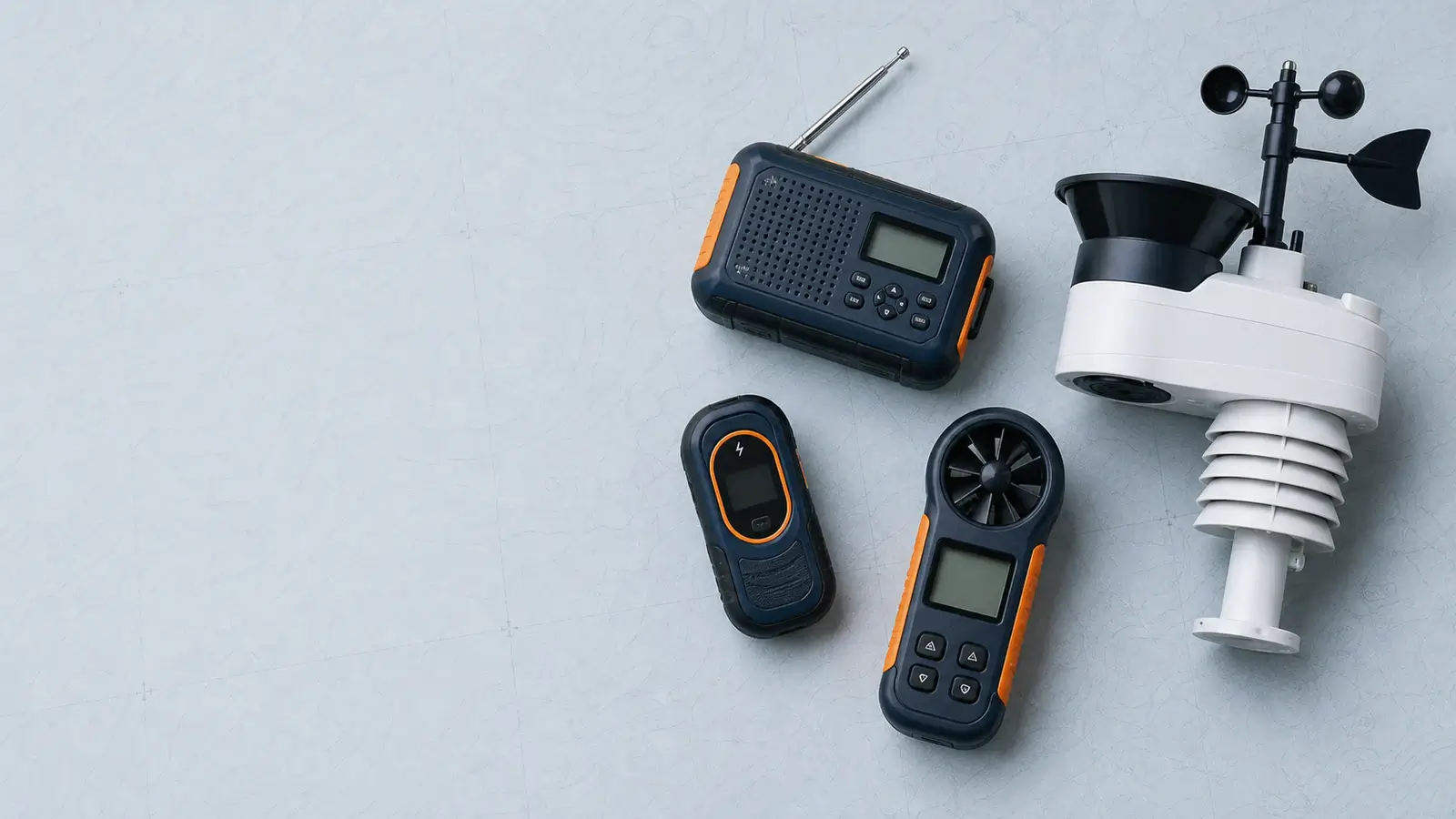
Choose by the decision in front of you
The most expensive tool is not automatically the most useful one. Match the gadget to a real action, the place where it will be used, and the limitation that could change your interpretation.
Start with a dedicated weather radio when you need overnight warning, battery backup, and an alert path that does not depend on a phone app.
Compare weather radios →
Watch lightning during outdoor activity
Consider a personal detector when one designated weather watcher can monitor it, act early, and move people into substantial shelter.
Compare lightning detectors →
Take portable field readings
Use a handheld weather meter when wind, temperature, humidity, pressure, direction, or logging must travel with you.
Choose a Kestrel meter →
Measure weather at one property
Choose a home weather station when you want a continuing local record of temperature, rain, wind, pressure, and related conditions.
Browse station reviews →
Weather gadget reviews and buying guides
These are the clearest routes into our equipment coverage. Each guide separates a device’s useful role from the limitation most likely to create false confidence, poor readings, or a frustrating purchase.
Best weather radios
Compare dedicated SAME radios and portable emergency models for home monitoring, outages, travel, and go-bags.
Best fit: Households that want a receiver they can program, power, test, and leave ready every day.
Open the weather radio guide →
Outdoor safety
Personal lightning detectors
Compare current handheld choices, range displays, alert methods, interference limits, and important availability cautions.
Best fit: Outdoor users who can act on an alert and already know where substantial shelter is located.
Open the lightning detector guide →
Portable measurement
Kestrel weather meters
Match basic and 5 Series meters to wind, temperature, humidity, pressure, direction, logging, and LiNK needs.
Best fit: Field work, outdoor sports, sailing, shooting, research, and any task that needs representative spot readings.
Open the Kestrel model guide →
Want cross-brand alternatives? See the portable weather-station guide for Kestrel and other handheld field meters.
Understand the system before comparing models
Buying guides are easier to use when the underlying technology makes sense. These explainers cover the signal, network, and layout choices behind the products.
Learn the seven frequencies, SAME location codes, alert behavior, and setup steps that matter after purchase.
Read the explainer →
How lightning detection works
See how ground networks, satellites, airport sensors, and personal devices detect different parts of the lightning problem.
Read the explainer →
How to choose a home station
Work through measurements, siting, sensor layout, data access, power, serviceability, and total ownership cost.
Use the buying guide →
Four checks before buying any weather gadget
A feature list tells you what a device contains. These checks tell you whether the device can improve a real decision in the place where you plan to use it.
Name the action
Decide what changes when the tool reports something. A useful answer might be waking the household, pausing a game, documenting rainfall, or checking field conditions.
Test the environment
Radio reception, nearby electronics, shelter distance, sensor exposure, and mounting access can matter more than another row in a specification table.
Plan power and data
List every battery, wall connection, charging method, app, network, console, and subscription the setup needs to keep working.
Plan the next test
Choose how you will verify alerts, compare readings, clean sensors, inspect mounts, replace batteries, and notice when the system has stopped earning your trust.
Make a weather station useful after purchase
A capable station can still give poor readings when sensors are badly exposed, the mount moves, debris blocks the rain collector, or maintenance becomes difficult. These owner guides turn the hardware into a reliable observing system.
Compare common mounting approaches through stability, exposure, service access, and property constraints.
Explore mounting options →
Plan the exposureInstallation and siting guide
Build a workable plan for temperature, rain, wind, solar exposure, console placement, and future access.
Plan the installation →
Know the measurementsWeather station sensors explained
Understand what each sensor measures, what can distort the reading, and which observations matter for your goals.
Learn the sensors →
Protect the recordStation maintenance checklist
Create a recurring routine for cleaning, batteries, level, fasteners, exposure, and suspicious data.
Use the maintenance guide →
How WXObservation evaluates weather gear
Our guides use current manufacturer documentation, official weather-safety guidance when a device affects safety, and practical setup constraints. The goal is a defensible fit between the tool and the reader, not a universal winner.
We start with the job and the user, then judge whether added features improve that job.
We distinguish current models, older families, bundles, and retailer pages instead of treating similar names as interchangeable.
We explain reception, interference, siting, shelter, power, and data limits near the recommendation they affect.
We consider testing, batteries, cleaning, calibration, service access, replacement support, and the cost of keeping the tool useful.
Move into the review hub to browse brands, direct comparisons, and exact-model guides.
Looking for setup help instead? Visit the weather station guide library.